Welsh meat processing plant moves with the times and tastes
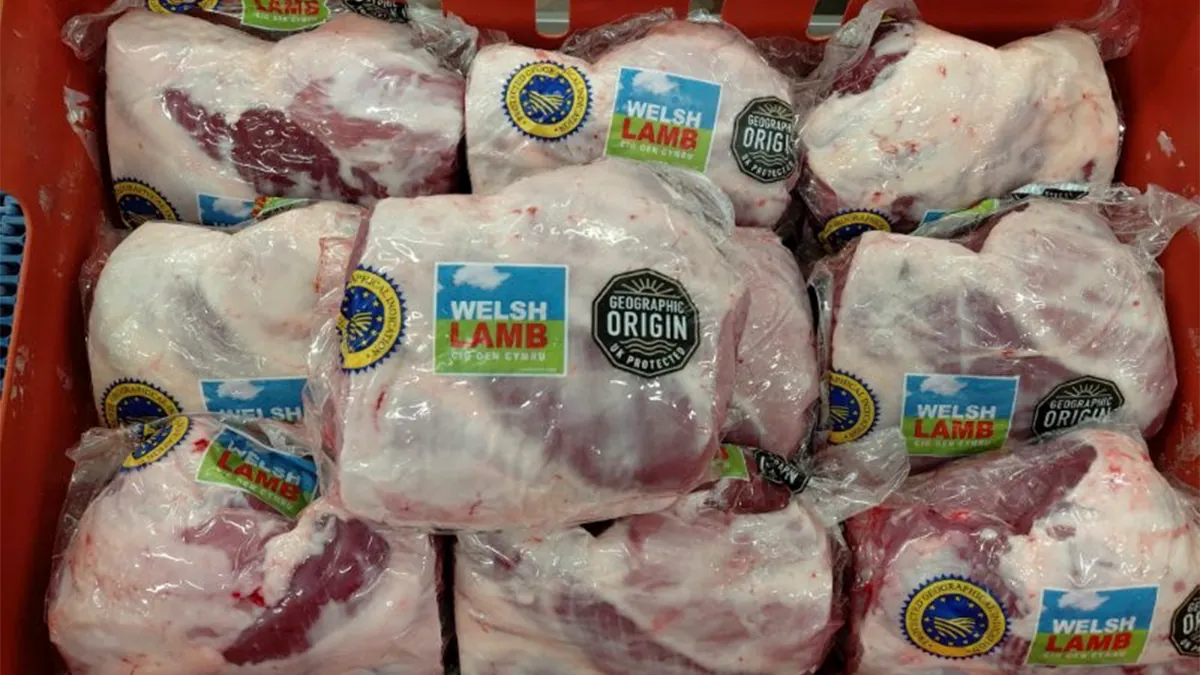
From NZ lamb to ready-to-heat meals, Dawn Meats’ Welsh plants show how technology and changing consumer demands are transforming meat processing.
Voluntary Subscription Home News Opinion Markets Politics Technology People On Farm Lifestyle Podcasts Poll Weekly Poll Results Special Reports Meeting the Market Real Estate Jobs Digital Newspaper The Latest More public service cuts proposed as ministry targets savings Ending consent uncertainty tops farmers’ election wish list From backyard seedlings to a thriving food business Farmers urged to step up footwear safety Wool & Fibre Weather Water & Irrigation Viticulture Video Trends Transport & Logistics Trade Sustainable Farming Sustainability Voluntary Subscription Podcasts Poll Special Reports Real Estate Jobs Digital Newspaper --> Voluntary Subscription Podcasts Poll Weekly Poll Results Special Reports Meeting the Market Real Estate Jobs Digital Newspaper --> Europe: Tracking Tomorrow's Food Trends Welsh meat processing plant moves with the times and tastes Neal Wallace October 12, 2026 Total 0 Shares 0 0 0 0 From NZ lamb to ready-to-heat meals, Dawn Meats’ Welsh plants show how technology and changing consumer demands are transforming meat processing.
Welsh Lamb has established itself as an elite brand in the UK, reflecting its distinct taste profile.
Reading Time: 3 minutes The history of Dunbia’s Llanybydder plant in Wales mirrors how markets have changed for meat.
Initially a lamb processing plant, it was established in 1956 by butcher Oriel Jones near the market town of Llanybydder, a community that straddles the River Teifi in Carmarthenshire, West Wales.
Current plant manager Paul Edwards said in those days the 70 staff mainly processed 13-14kg lambs for Smithfield market in London.
The business was later acquired by Dunbia and in 2017, following a merger, it became part of Dawn Meats.
The arrival in the 1990s of supermarkets had completely re-orientated the food industry, and saw retail packing added to the Llanybydder plant.
Each week the plant processes 1000 cattle and 15,000 lambs, and bones-out another 20,000 lambs.
In 2018 the cutting operation was shifted to a business park at Cross Hands, and today it employs about 1000 people working two shifts a day, seven days a week.
Peter Young, a senior finance business partner with Dawn Meats, said Cross Hands is the company’s first purpose-built further processing plant, supplying products throughout the UK.
Vacuum-packed minced or diced meat, steak, French racks, pre-cooked cuts such as lamb shanks, through to sous vide, ready to-heat kits of vacuum-packed meat, vegetables and sauces, come off multiple production lines.
Young said an innovation adopted from the fishing industry is an X-ray that measures the CL content in beef, detects bone fragments and ensures the exact fat content in beef mince required by customers.
The plant’s versatility means an order received at 10am can be dispatched by 2pm, said Young.
Michelle White, the head of marketing for Dawn Meats which includes Dunbia, said Welsh Lamb has been established as a brand, its promotion supported by levies from farmers and processors.
She said the brand trades on history and provenance but also a distinct taste profile.
Edwards said buyers in Portugal and Spain want lambs between 9kg and 14kg, which are source from the late lambing Upland properties.
Related News
- ChemicalReport: Texas' Chemical Plant Expansion Affects POC Areas
- ChemicalVerbio commissions large-scale ethenolysis plant for bio-based chemicals in Bitterfeld, Germany
- ChemicalForgotten oil and gas wells linger, leaking toxic chemicals
- ChemicalDirt on the back of the air conditioner heat exchanger [Fukuoka] | What happens on the side you cannot see from the front, and how to clean it
- ChemicalHeat Exchanger Market Analysis Report: 13,851 Million USD in 2026, 3.9% Growth Rate
- ChemicalInnovative Heat Exchanger Technology Enhances Proven Designs