Report: Texas' Chemical Plant Expansion Affects POC Areas
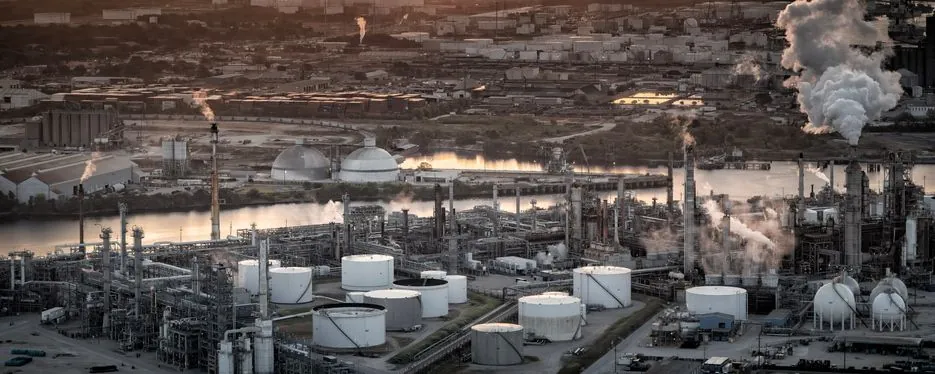
Researchers for the Bullard Center for Environmental and Climate Justice found Texas' chemical plant expansion mostly affects people of color.
Subscribe Toggle search Close Civil Rights & Social Justice Report: Texas' Chemical Plant Expansion Affects POC Areas Researchers Found Texas’ Chemical Plant Expansion Disproportionately Affects Poor, POC Communities Researchers for the Bullard Center for Environmental and Climate Justice found Texas' chemical plant expansion mostly affects people of color.
Comments Share Share the post Share this link via Or copy link Copy Copied Source: Art Wager / Getty One form of systemic racism that often goes overlooked — or outright denied by white conservative America, like literally all forms of systemic racism — is environmental racism.
Recently, researchers for the Bullard Center for Environmental and Climate Justice at Texas Southern University in Houston found that about 90% of industrial facilities in the state of Texas are located in counties with higher concentrations of people of color and families in poverty than statewide averages.
The researchers came to this conclusion after analyzing the demographic data in areas where nearly 100 facilities are located, and they also “found that nearly half of those proposed industrial sites—petrochemicals plants for manufacturing plastics, coastal export terminals, refineries and other facilities—were already above the 90th percentile for pollution exposure under the U.S.
Environmental Protection Agency’s Toxics Release Inventory, a measurement of harmful industrial emissions,” according to Inside Climate News .
“Texas and other states must end decades-long industrial facility siting where economically disadvantaged fenceline communities serve as dumping grounds,” the report concluded.
“The process of the dumping, the siting, has not changed over these 45 years that I’ve been studying this,” Robert Bullard, the center’s director and lead author of the report, said in a recent interview.
“America is segregated, and so is pollution.” Planned projects reviewed in the Bullard Center’s latest work, “ Green Light to Pollute in Texas ,“ cluster primarily around the state’s existing refinery hubs on the Gulf Coast, such as Port Arthur, the Houston Ship Channel, Freeport and Corpus Christi.
Nearly half are located near neighborhoods that already face among the highest levels of toxic air pollution in the country, the report said.
These petrochemical complexes have grown rapidly in the last decade, fueled by abundant oil and gas from the fracking boom in the oilfields of Texas and beyond.
Plastics industries dominated that growth.
Plastics producers in Texas last year sold $61.5 billion in materials and employed 54,000 people, more than any other state, according to a recent report by the American Chemistry Council, an industry group.
Related News
- ChemicalVerbio commissions large-scale ethenolysis plant for bio-based chemicals in Bitterfeld, Germany
- ChemicalForgotten oil and gas wells linger, leaking toxic chemicals
- ChemicalDirt on the back of the air conditioner heat exchanger [Fukuoka] | What happens on the side you cannot see from the front, and how to clean it
- ChemicalHeat Exchanger Market Analysis Report: 13,851 Million USD in 2026, 3.9% Growth Rate
- ChemicalInnovative Heat Exchanger Technology Enhances Proven Designs
- ChemicalHeat Exchanger Market to Hit $33 Bn By 2032, Says Global Market Insights Inc.