Maurel & Prom Confirms 200 bcf Gas Find at Mnazi Bay
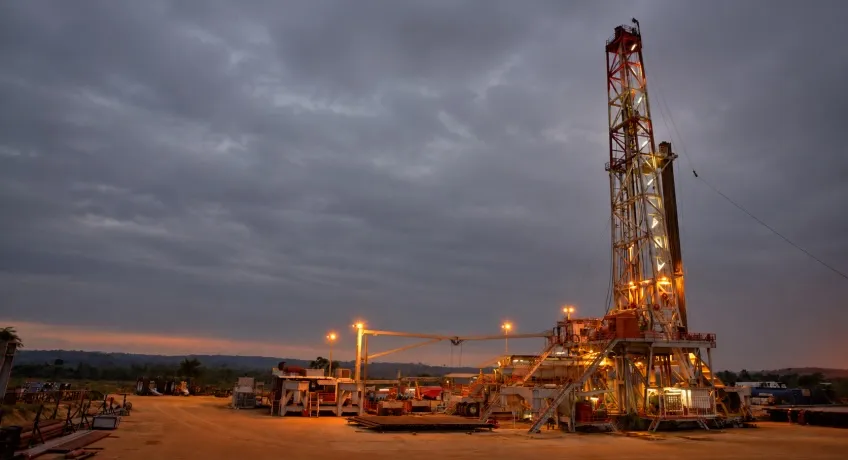
Tanzania's Mnazi Bay gas hub has a new feather in its cap, with operator Maurel & Prom proving up a fresh reservoir through an offshore exploration well that could start feeding the system before the year is out.
The Kasa-1X well was drilled from an onshore coastal location to a target some 4.5 kilometers offshore in about 400 meters of water, with drilling operations having started in June.
The very first penetration encountered gas, and rather than wait on a second well, the operator immediately sidetracked and steered a horizontal section that cut 588 meters of reservoir.
Maurel & Prom, which runs the license with a 60 percent working interest, puts the discovery at roughly 200 billion cubic feet of gas on a gross basis, or 120 bcf net to the company.
First production from the new well is targeted as early as November 2026 at a potential rate of 50 million cubic feet per day on a 100 percent basis.
Kasa-1X is not working alone, because it follows the MB-5 and MS-2 development wells, both drilled in the first half of 2026 and already onstream.
Those two lifted field output to about 130 million cubic feet per day and raised Mnazi Bay's production potential to nearly 200 million cubic feet per day.
The company published the results on 22 October 2026.
For engineers and procurement teams, a fast-track gas discovery that moves from spud to first production inside roughly five months says a lot about how Mnazi Bay is being developed.
Speed like that only works when the surface kit is ready ahead of the rig, which means wellhead equipment, choke manifolds and flowlines for Kasa-1X were almost certainly ordered and staged early, a useful template for anyone selling into East African gas where lead time rather than price tends to win the job.
The 588-meter horizontal reservoir section signals sustained demand for sand-control and completion hardware, and gross production headed toward 200 million cubic feet per day keeps compression, dehydration and metering packages on the shopping list as the field scales.
Tanzanian gas is piped to power and industrial users onshore, so any volume growth translates into upstream separation and slug-catching capacity as well as integrity work on the export pipeline.
Buyers should also note the operational profile, because an offshore target drilled from land keeps drilling costs low but concentrates all fluid handling on coastal facilities, which rewards suppliers who can deliver compact modular process skids that install quickly with minimal heavy lifting.
With production expected as early as November 2026, spares and after-sales support contracts will follow the start-up date closely.
Related News
- Oil & GasArrow Starts First Carbonera Horizontal Well in Colombia
- Oil & GasGeoPark Wins Corralera Noreste Block in Vaca Muerta
- Oil & GasBaker Hughes agrees power framework: what it means for Baker Hughes stock
- Oil & GasHow Power Island Deal Will Impact Baker Hughes (BKR) Investors
- Oil & GasBaker Hughes (BKR) Signed Long Term Energy Infrastructure Agreements
- Oil & GasHalliburton (HAL) Stock May Still Offer Value Following Q3 Earnings Reset