Food processing worker safety improving, but injury rates still high
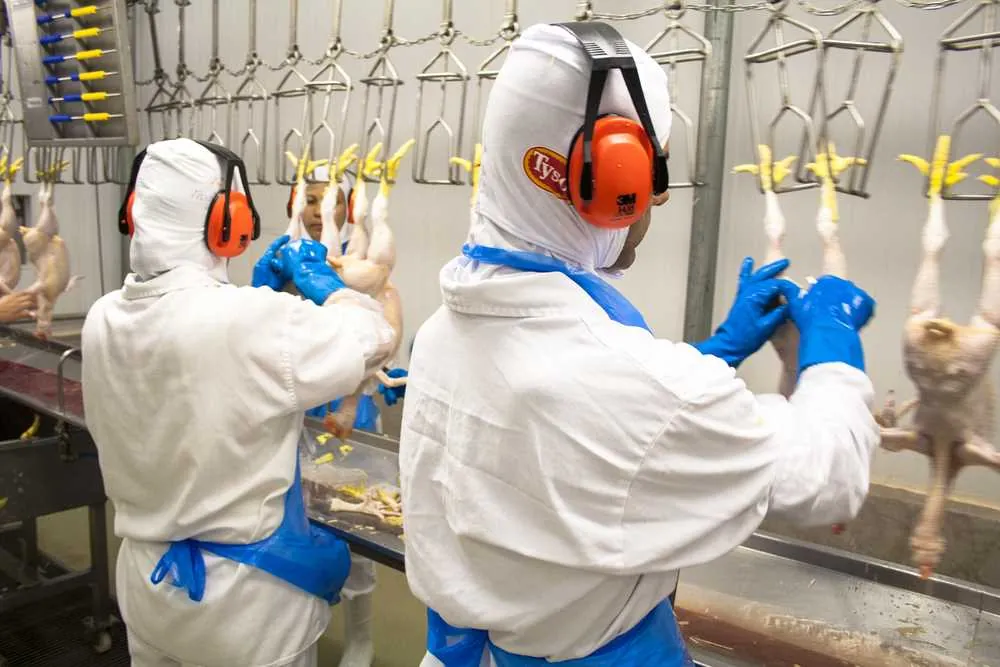
The worker safety record in the food processing business has long lagged other sectors, but advances in ergonomics and automation are helping close the gap.
Safety managers now take a more holistic ...
Register for free Food processing worker safety improving, but injury rates still high by Bill Kenealy Mar 1, 2015 The worker safety record in the food processing business has long lagged other sectors, but advances in ergonomics and automation are helping close the gap.
Safety managers now take a more holistic approach that focuses on automating dangerous or repetitive tasks while working with business leaders, engineers and equipment manufacturers to drive risk of injury out of the production process.
Ken Wengert, Chicago-based director of safety and environmental at Kraft Foods Group Inc.
— with products ranging from Kool-Aid to Philadelphia cream cheese to Oscar Mayer meats — said he has seen a dramatic improvement in food processing plant safety during the course of his career.
“We have had improved safety performance year over the year for the past 20 years, but our rate of improvement has improved dramatically over the past five,” Mr.
Wengert said, largely crediting an accumulation of incremental process improvements coupled with better technology for the improved safety record.
“The safety components the manufacturers include on our processing equipment have come a long way in just the last few years.” Still, food processing workers get hurt more than people working in other manufacturing industries.
The food processing industry’s injury rate was 5.0 injuries per 100 full-time workers in 2013, the latest data available from the U.S.
Pressley, Tucker, Georgia-based executive vice president of industry programs at the U.S.
Poultry & Egg Association, cited Occupational Safety and Health Administration data showing that poultry processors have roughly halved their illness and injury rate over the past decade.
“In the early 1980s, I started as a safety manger (at a poultry processing plant) and then worked as a director of risk management and insurance, so I’ve seen an awful lot of workers compensation claims,” Mr.
“There was a long learning curve, but it has been remarkable to see the change in the processing plants themselves … We’ve gone from a slaughterhouse mentality to food processing mentality.” “Safety managers used to walk the factory floor and look for violations, but we don’t much anymore,” Kraft’s Mr.
“Back then, the mindset was more about meeting OSHA’s regulatory requirements, but now the general perception is that there is a huge disconnect between regulatory compliance and actual injury prevention.” Food processors can make workers safer by investing in ergonomics, said Woody Dwyer, Hartford, Connecticut-based second vice president of workers compensation and risk control at Travelers Cos.
Such ergonomically driven changes also can help improve worker productivity and food quality, Mr.
“We can show companies that if you make these engineering changes, there is a good return on investment,” he said.
Rather than re-engineering existing facilities and processes, Mr.
Wengert said, “It’s so much easier and cheaper for organizations to design safety into new organizations and new processes.” Mr.
Pressley said poultry producers have leveraged automation to increase worker safety as well as efficiency.
While processes such as killing, gutting and cutting poultry once were performed by “people standing shoulder to shoulder on processing lines with sharp knives,” the work now is largely automated, he said.
“Pretty much the last manual labor-intensive process is deboning, and that’s because the technology hasn’t caught up with us yet,” he said.
“When we talk about injuries from food preparation, strains and sprains are the loss leaders,” Mr.
“You often have heavy raw materials going into the process, which can create risk.” Donald A.
Related News
- ChemicalReport: Texas' Chemical Plant Expansion Affects POC Areas
- ChemicalVerbio commissions large-scale ethenolysis plant for bio-based chemicals in Bitterfeld, Germany
- ChemicalForgotten oil and gas wells linger, leaking toxic chemicals
- ChemicalDirt on the back of the air conditioner heat exchanger [Fukuoka] | What happens on the side you cannot see from the front, and how to clean it
- ChemicalHeat Exchanger Market Analysis Report: 13,851 Million USD in 2026, 3.9% Growth Rate
- ChemicalInnovative Heat Exchanger Technology Enhances Proven Designs