Eni-PETRONAS Searah Starts Maha Gas Offshore Indonesia
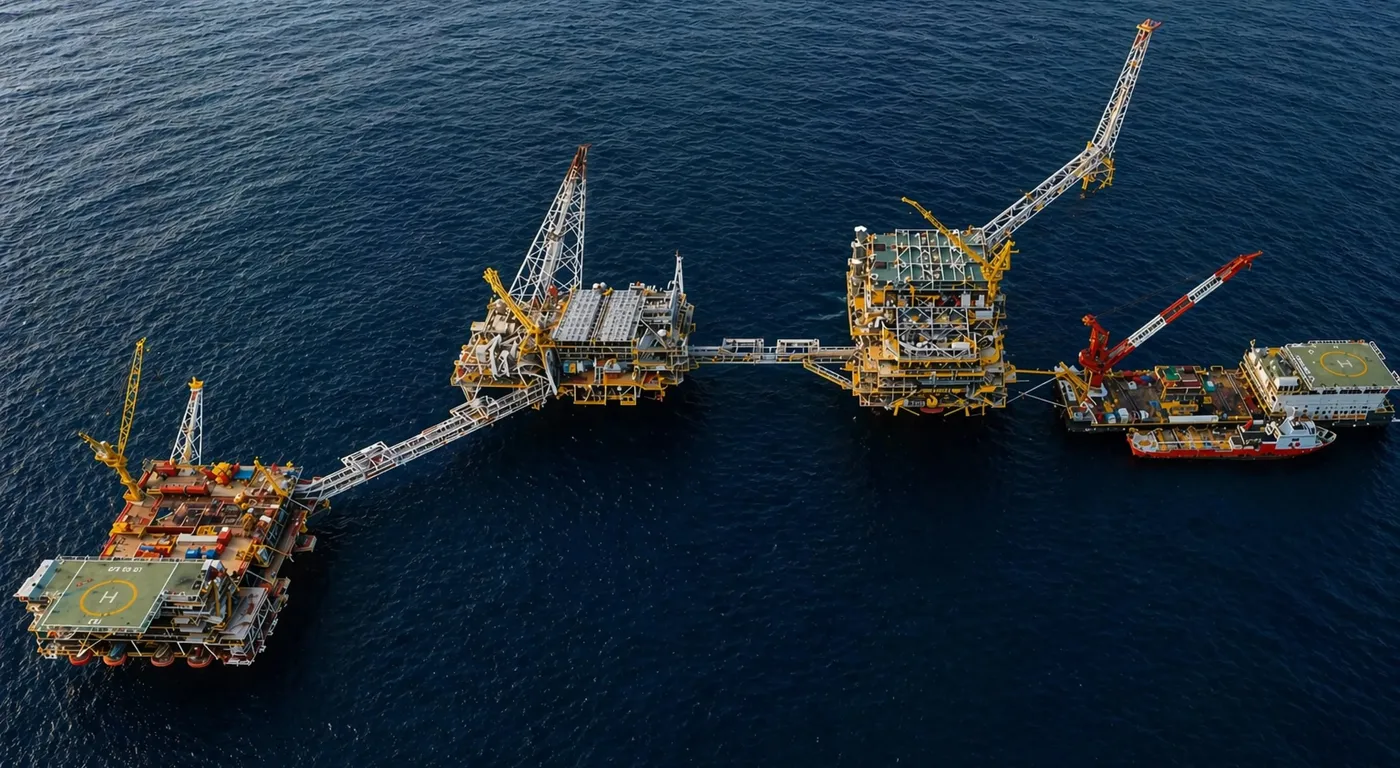
Searah, the joint venture owned equally by Eni and PETRONAS, has started gas production from the Maha field in the Kutei Basin offshore Indonesia, reaching first gas 21 months after the final investment decision.
Maha lies in the West Ganal block in around 1,000 meters of water, and both of its producers sit on the seabed and connect back to the Jangkrik floating production unit already on station through about 12 kilometers of flowlines.
The field is designed to produce 250 mcf/d, a volume that lifts combined output from the Jangkrik floating unit and the South Hub to a plateau of 750 mcf/d.
After initial processing on the floating unit, the gas moves through the pipeline network to the domestic market and onward to the Bontang LNG plant.
Maha forms part of the South Hub development and follows the Merakes East startup in May 2025, along with final investment decisions taken in March 2026 on the North Hub, covering Geng North and Gehem, and on the South Hub projects.
The Gendalo and Gendang project is expected to start up and tie into the same floating unit in 2028, extending the production plateau beyond the end of the decade.
Searah itself was formed in June 2026 and now holds 19 gas fields in producing or development stages, 14 of them in Indonesia and the remaining five in Malaysia.
For engineers and procurement teams, a 21-month run from final investment decision to first gas in around 1,000 meters of water is the number worth noting, because it demonstrates what a lean tieback strategy can deliver when new wells reuse an existing floating production unit rather than waiting on fresh facilities.
Two subsea wells connected through roughly 12 kilometers of flowlines mean the incremental scope was concentrated in subsea trees, manifolds, umbilicals and flowline hardware instead of a new topsides, a split that compresses schedule risk mainly into equipment delivery and installation windows.
The capacity arithmetic matters as well, since Maha's contribution raises the combined Jangkrik and South Hub system to a 750 mcf/d plateau, which asks compression and processing trains to absorb higher throughput without derating.
Because the gas is ultimately destined for the Bontang LNG plant, quality and delivery pressure tolerances across the pipeline network become commercial variables and not merely technical ones.
With Gendalo and Gendang due to tie in during 2028, the same hub will take successive brownfield additions, which sustains demand for intervention services, spare parts and valve maintenance across a growing subsea network that the young venture, holding 19 assets across two countries, now manages at portfolio scale.
Related News
- Oil & GasBP Confirms Hydrocarbons at Tupinamba Well Offshore Brazil
- Oil & GasPetrobras Installs First ROCS Smart Completion in Brazil
- Oil & GasSaipem Lands $121M Eni Drilling Jobs Off Cyprus, Ghana
- Oil & GasWestgate Energy Kicks Off Fall Campaign With 9,600 m Well
- Oil & GasRigCo, Seatrium to Complete Four Offshore Rigs, S$500M
- Oil & GasSantos Starts PNG Oil Infill Campaign With First Well Spud