Water innovation and treatment trains: Lessons from the UK’s first ozone-based micropollutant removal plants
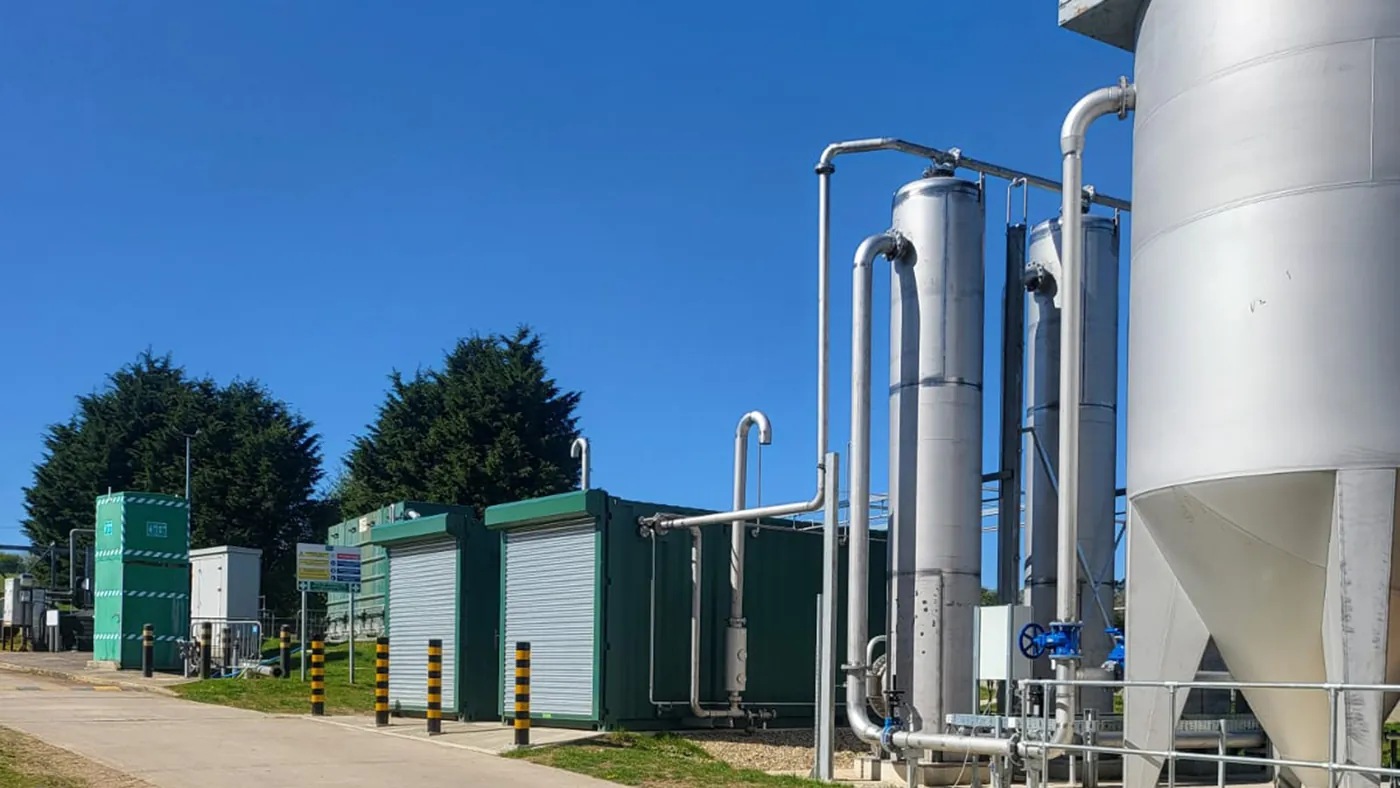
How the UK’s first ozone-based micropollutant removal plants are helping water utilities tackle PFAS, microplastics and contaminants.
Since Curio Water engineered and helped deliver the UK’s first ozone-based micropollutant plants at Severn Trent last year, we’ve learnt a lot about the practicalities of how utilities can deploy the latest innovations to deal with new and emerging contaminants.
This includes PFAS, microplastics and micropollutants – all of which are currently facing growing public and regulatory scrutiny.
For utilities and those seeking to work with them, the challenge is essentially threefold.
First and foremost, any treatment infrastructure must be built around rigorous pilot testing to fully understand the water matrix and its behaviour in response to treatment.
This is not simply a matter of understanding what contaminants are present, but whether they fluctuate seasonally, how the presence of certain contaminants can affect previously proven treatments and ultimately the long-term effectiveness of a co-ordinated train of removal technologies.
The second is a dose of realism when it comes to working with existing infrastructure and understanding capital limits facing water companies at present.
Innovations will often need to be integrated into existing treatment sites.
The industry simply cannot afford to deploy advanced treatment at every works, and there must be a strategic consideration of how and where to deploy advanced removal technologies, as well as some bold thinking regarding how we can pre-treat highly contaminated run-off like stormwater before it reaches other waterways.
Lastly, there is a big education job to be done across the industry in understanding how complementary technologies, including ozone, granular activated carbon, filtration and UV, can only really work effectively together to remove a spectrum of new and emerging contaminants.
This is particularly relevant in wastewater and PFAS removal, where a high organic load competes for adsorption sites and shortens the working life of the GAC bed and other filtration methods.
A treatment train is essentially a tailored series of processes engineered around site-specific data.
Each stage complements the next, and in particular prepares the GAC bed to be as adsorptive and cost-efficient as possible when it comes to removing PFAS.
GAC is one of the most established technologies for removing long-chain PFAS such as PFOS (perfluorooctane sulfonate) and PFOA (perfluorooctanoic acid), but its capacity is finite and other material in the water can foul the bed and use it up.
Short-chain compounds such as PFBA (perfluorobutanoic acid) and PFBS (perfluorobutanesulfonic acid) present a different problem.
They are poorly retained on carbon and break through early, which is why ion exchange or membrane separation usually has to be considered alongside GAC.
In our new BlueBarrier treatment trains, the upstream stages are designed to address these problems.
The initial stage of ozonation breaks down many pharmaceuticals and pesticides, directly converting complex organic matter into more manageable parts.
Biologically activated carbon (BAC) filtration then consumes this treated matter, removing much of the organic load that would otherwise compete for sites on the GAC.
Ultrafiltration removes suspended solids, and colloidal material shed from the biological stage, so the water reaching the GAC is clean and in low turbidity.
Related News
- Water Treatment11 Missing as Drone Attacks Strike Two Ships Near NATO Waters
- Water TreatmentFast-track pipeline project raises alarms over water safety, reliance on fossil fuels
- Water TreatmentMexico breaks ground on new desalination plant in Rosarito to bolster region’s water supply
- Water TreatmentKiewit Picked for $757M Corpus Christi Desalination Plant
- Water TreatmentProposed Bacliff desalination plant raises concerns about Galveston Bay’s future
- Water TreatmentWhat you need to know about desalination, a growing source of drinking water