Southern California Ports Shatter Cargo Records as Imports Surge
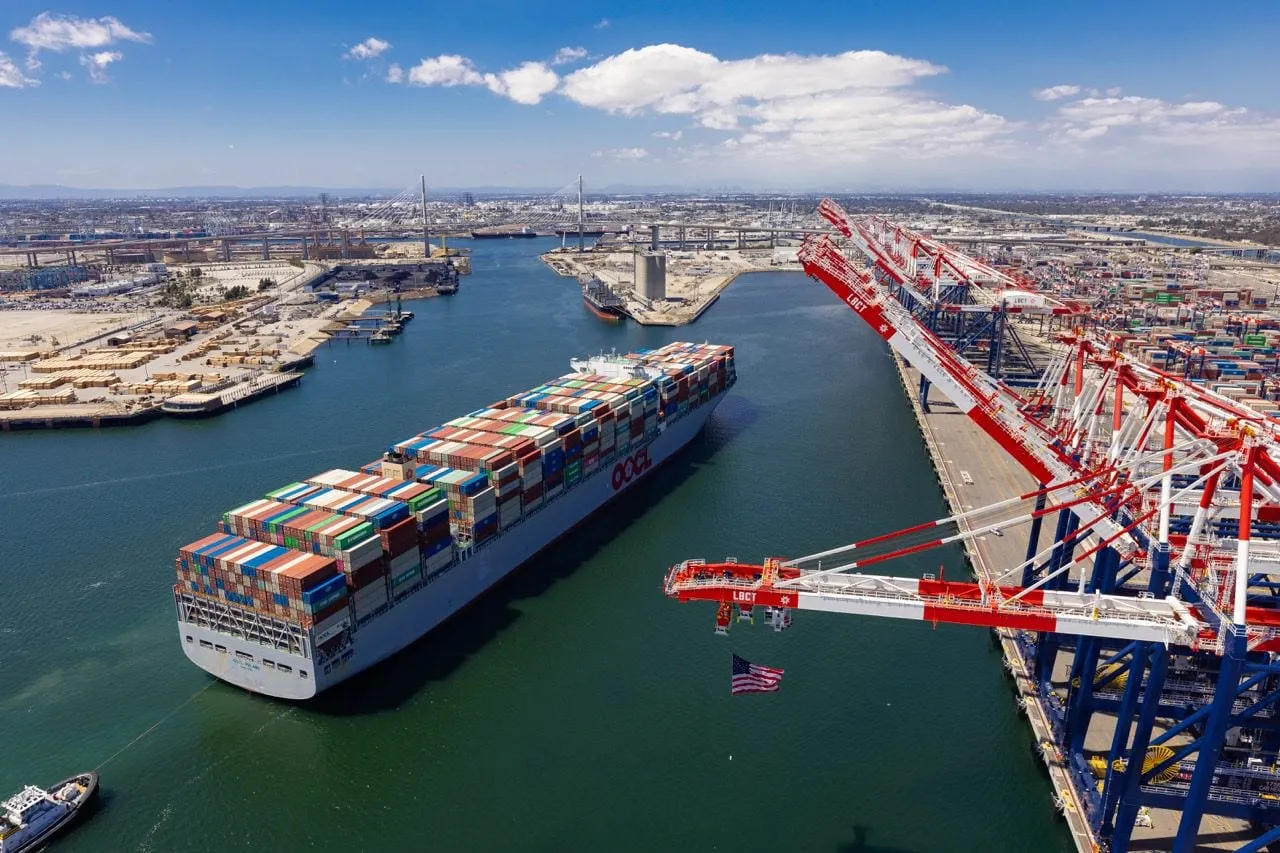
The ports of Los Angeles and Long Beach both set all-time monthly cargo records in September, handling a combined 2.04 million twenty-foot equivalent units (TEUs) as strong imports and shifting...
Essential news coupled with the finest maritime content sourced from across the globe.
The ports of Los Angeles and Long Beach both set all-time monthly cargo records in September, handling a combined 2.04 million twenty-foot equivalent units (TEUs) as strong imports and shifting global trade patterns continued to drive cargo through the nation’s busiest port complex.
The Port of Long Beach reported Thursday that it handled 997,177 TEUs in September, up 25% from a year earlier and surpassing its previous record of 987,191 TEUs set in October 2024.
It was the busiest month in the port’s 115-year history.
The milestone follows last week’s record-breaking announcement from the Port of Los Angeles , which handled 1,042,652 TEUs in September, the highest monthly total in its 118-year history.
Together, the neighboring ports moved 2,039,829 TEUs in September, including more than 1.05 million TEUs of loaded imports, as retailers continued replenishing inventories and shippers adjusted their routing strategies amid high fuel costs, trade uncertainty and disruptions along other major shipping routes.
“Shippers continue to lean on the Port of Long Beach as a reliable partner in their business strategies, leading to our historic month for cargo,” said Port of Long Beach CEO Noel Hacegaba during the port’s monthly Supply Chain Insight briefing.
Imports led the surge at Long Beach, climbing 31.3% from a year earlier to 509,390 TEUs.
Exports increased 7.8% to 91,747 TEUs, while empty container movements rose 22.1% to 396,040 TEUs.
Los Angeles reported similarly strong numbers, with loaded imports rising 19% to 545,696 TEUs.
The port also handled 125,751 TEUs of exports and approximately 371,206 empty TEUs, both increases from a year earlier.
Port officials have attributed the strong performance to several factors, including resilient consumer demand, lower U.S.
tariffs and shippers seeking alternatives to traditional routes affected by Panama Canal restrictions and security concerns around the Suez Canal.
High diesel prices have also made the shorter transpacific route to the U.S.
The record-breaking September comes as the National Retail Federation (NRF) expects the unusually long peak shipping season to finally wind down.
In its latest Global Port Tracker report , released October 8, NRF and Hackett Associates projected that imports at major U.S.
container ports would ease from 2.3 million TEUs in August to 2.28 million TEUs in September, followed by 2.25 million TEUs in October and 2 million TEUs in November.
“Even with any fluctuations in final data, we’re likely past the busiest part of the year,” said Jonathan Gold, NRF vice president for supply chain and customs policy.
The forecast follows months of stronger-than-expected imports that extended the traditional peak season well into the fall.
Notably, both Southern California ports have reported handling the increased volumes without the congestion that disrupted operations during the pandemic.
At Long Beach, Total Terminals International set a new monthly rail record in September, handling 59,410 rail moves, representing nearly half of the terminal’s container volume.
Related News
- LNGSuper El Niño Could Ease Asia’s LNG Supply Concerns
- LNGPakistan Faces $1 Billion LNG Bill This Winter
- LNGShell Slams Australia's Plan to Force LNG Producers to Supply Domestic Market
- LNGChina’s $3 Billion Qatar LNG Deal Raises an Awkward Question
- LNGShell, GTT, and Lloyd’s Register eye hybrid-electric LNG carrier design
- LNGNew wind for hydrogen-electric shipping as GMI-PowerCell collaboration expands to four bulk carriers