Ship-Fuel Crunch to Persist Despite More Oil, Vitol Says
Accelerating crude exports through the Strait of Hormuz aren’t translating into higher production of a dirty shipping fuel, according to a top Vitol Group executive, tightening supplies and sending prices soaring.
Essential news coupled with the finest maritime content sourced from across the globe.
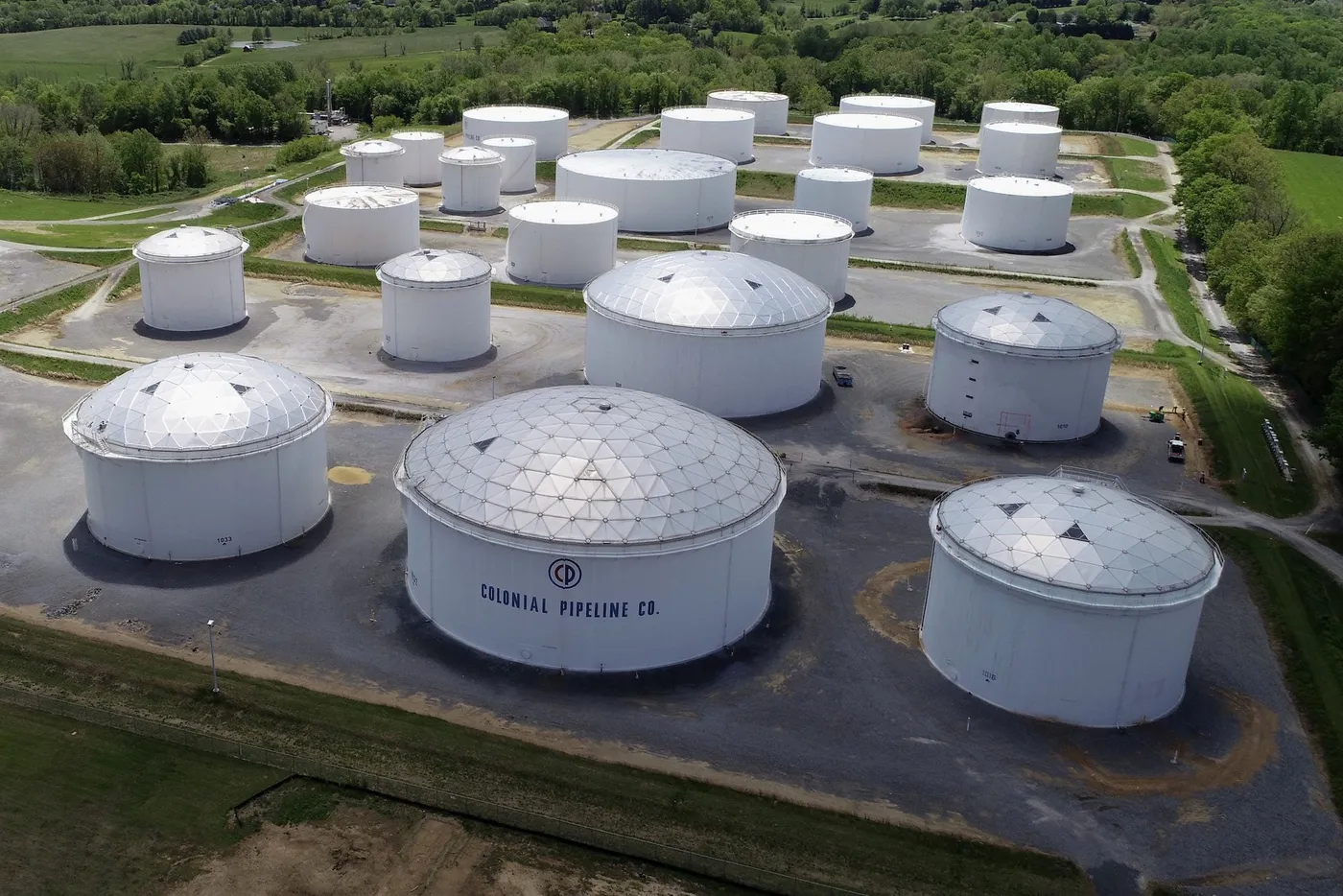
Holding tanks are seen in an aerial photograph at Colonial Pipeline's Dorsey Junction Station in Woodbine, Maryland, U.S.
REUTERS/Drone Base Oct 16, 2026 (Bloomberg) –Accelerating crude exports through the Strait of Hormuz aren’t translating into higher production of a dirty shipping fuel, according to a top Vitol Group executive, tightening supplies and sending prices soaring.
The Middle East conflict has reduced fuel oil supply from the Persian Gulf, including from Iran, by 800,000 tons per month, while Ukrainian attacks on Russian refineries have cut supply by 1 million tons per month, Vitol’s Asia head Kieran Gallagher said at a conference in Singapore this week.
“Many are looking to increased crude flows through the Strait of Hormuz as a silver bullet, but more crude does not necessarily mean more high-sulfur fuel oil,” Gallagher said at Sibcon .
“Refining margins are exceptionally strong and refiners have been maximizing throughput to capture those returns,” he added, referring to refiners prioritizing other products such as diesel.
The supply squeeze stemming from the two wars has driven prices of high-sulfur bunker fuel made with HSFO in Singapore to the highest level since April, according to data provider ClearLynx LLC.
The city-state is the world’s biggest supplier of ship fuel.
On Thursday, HSFO costs in Asia soared relative to crude, rising to a seven-month high, according to Bloomberg Fair Value data.
Demand for HSFO as a refinery feedstock is adding to the squeeze.
North Asian refiners are set to use more than 1 million tons of HSFO to feed upgrading units in November after disruptions to Saudi crude exports from the Red Sea, said Gallagher.
Restoring medium and heavy oil supplies to those processors would reduce their reliance on fuel oil as a feedstock and release those barrels back into the bunker pool, he added.
The picture is less strained for another shipping fuel, low-sulfur fuel oil.
That market is “more benign” because China continues to export barrels, while Nigeria’s Dangote refinery has increased its operating rates since August and is exporting two to three Suezmax cargoes per month, Gallagher said.
Bunker suppliers and traders present at Sibcon said there’s fierce competition for blending components used to reduce impurities, flammability and viscosity in ship fuel to produce LSFO grades.
Essential maritime and offshore news, insights, and updates delivered daily straight to your inbox Dive into a sea of curated content with our weekly ‘Dispatch’ email.
Shipowners are facing an increasingly fragmented fuel market as disruptions triggered by the Middle East conflict raise concerns about the availability and quality of supply.
Saudi Arabia is looking at ways to expand its oil pipeline capacity to destinations outside the Persian Gulf to 10 million barrels a day within two to three years, said Energy Minister Prince Abdulaziz bin Salman.
Indian refiners have cut back Russian crude purchases for November delivery, as rising competition from China pushes up prices at a time when buyers can tap alternative shipments from the Middle East.
Related News
- MiningIndia's 97 GW Coal Expansion Plan Looks Too Small, Senior Official Says
- MiningExplosives: The overlooked risk that could halt mines
- MiningOp-Ed: AI will not just add copper demand. It could change who sets the price
- MiningSouth America’s copper boom faces a $170B reality check
- MiningHertha Metals breaks ground on $100M US plant for magnet-grade iron
- MiningEnergyX inks 10-year, $2B lithium offtake deal with Trafigura