Seequent tapping AI to extract knowledge from geoscientific imagery with Imago
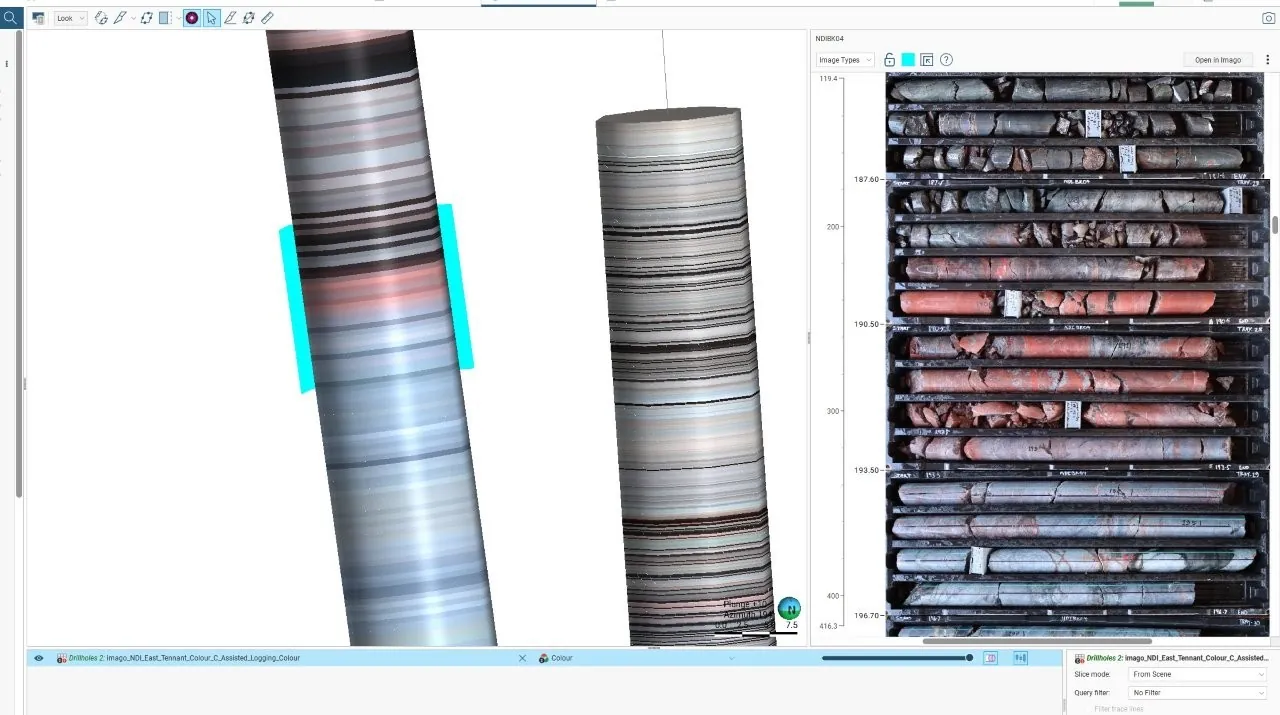
Seequent, The Bentley Subsurface Company, has launched Imago image analysis, a new AI-powered capability built directly into its cloud-based solution Imago for extracting knowledge from geoscientific imagery.
With the new Imago image analysis add-on, geologists can analyse drill core imagery in minutes, dramatically accelerating analysis that has traditionally taken days or weeks, according to the The post Seequent tapping AI to extract knowledge from geoscientific imagery with Imago appeared first on International Mining .
Seequent, The Bentley Subsurface Company, has launched Imago image analysis, a new AI-powered capability built directly into its cloud-based solution Imago for extracting knowledge from geoscientific imagery.
With the new Imago image analysis add-on, geologists can analyse drill core imagery in minutes, dramatically accelerating analysis that has traditionally taken days or weeks, according to the company.
It generates consistent, high-confidence quantitative geological data to support modelling and exploration decisions, helping teams from junior explorers to mining majors derive greater value from drilling programs.
Purpose-built machine-learning models automate core image preparation and analysis, converting new and historical drill core tray images into outputs such as downhole datasets for Rock Quality Designation (RQD).
In one example, Imago image analysis processed 600 metres of core imagery in two minutes, producing structured, depth-referenced drilling data for downstream interpretation, Seequent explains.
Tim Schurr, Seequent’s Product Line Manager, Drilling Data, said a significant opportunity for AI in exploration is to embed it directly into the workflows geologists already use – not simply to accelerate tasks, but to improve the consistency and confidence of the geological data that underpins exploration decisions.
“Every core tray represents a substantial investment, yet core logging has traditionally been a manual, qualitative process, with results influenced by the training, experience, time and resources available to the geologist or core logger.
“By applying AI within Imago’s established workflow, Imago image analysis brings repeatability to the process, helping organisations save time and money while improving the consistency of the data captured.
That matters for every decision that follows.
Geologists can investigate unexpected results, challenge assumptions and validate and strengthen the models that guide drilling decisions.” Imago image analysis uses Seequent’s proprietary machine-learning models to transform core photo libraries collected across years of drilling programs into quantitative geological data, Seequent says.
Geologists can review outputs against the underlying core imagery, adjust the analysis and validate results before using them in modelling, interpretation and exploration decision making – while preserving a direct connection to the rock itself.
Customer imagery and geological data remain securely managed within the Imago environment, with customers retaining control over their data.
They can optionally leverage it to improve analysis outcomes.
Imago image analysis connects core imagery and generated geological data with the wider exploration workflow.
Validated interval data can flow into Leapfrog for 3D geological modelling, MX Deposit for drill hole and sample data management, and other integrated geology software for further investigation.
This connection extends the value of core imagery and geological data beyond initial core logging, supporting interpretation and decision making throughout the exploration and mining lifecycle, Seequent says.
Related News
- MiningIndia's 97 GW Coal Expansion Plan Looks Too Small, Senior Official Says
- MiningExplosives: The overlooked risk that could halt mines
- MiningOp-Ed: AI will not just add copper demand. It could change who sets the price
- MiningSouth America’s copper boom faces a $170B reality check
- MiningHertha Metals breaks ground on $100M US plant for magnet-grade iron
- MiningEnergyX inks 10-year, $2B lithium offtake deal with Trafigura