Offshore wind power projects are flailing, just when the East Coast needs them most
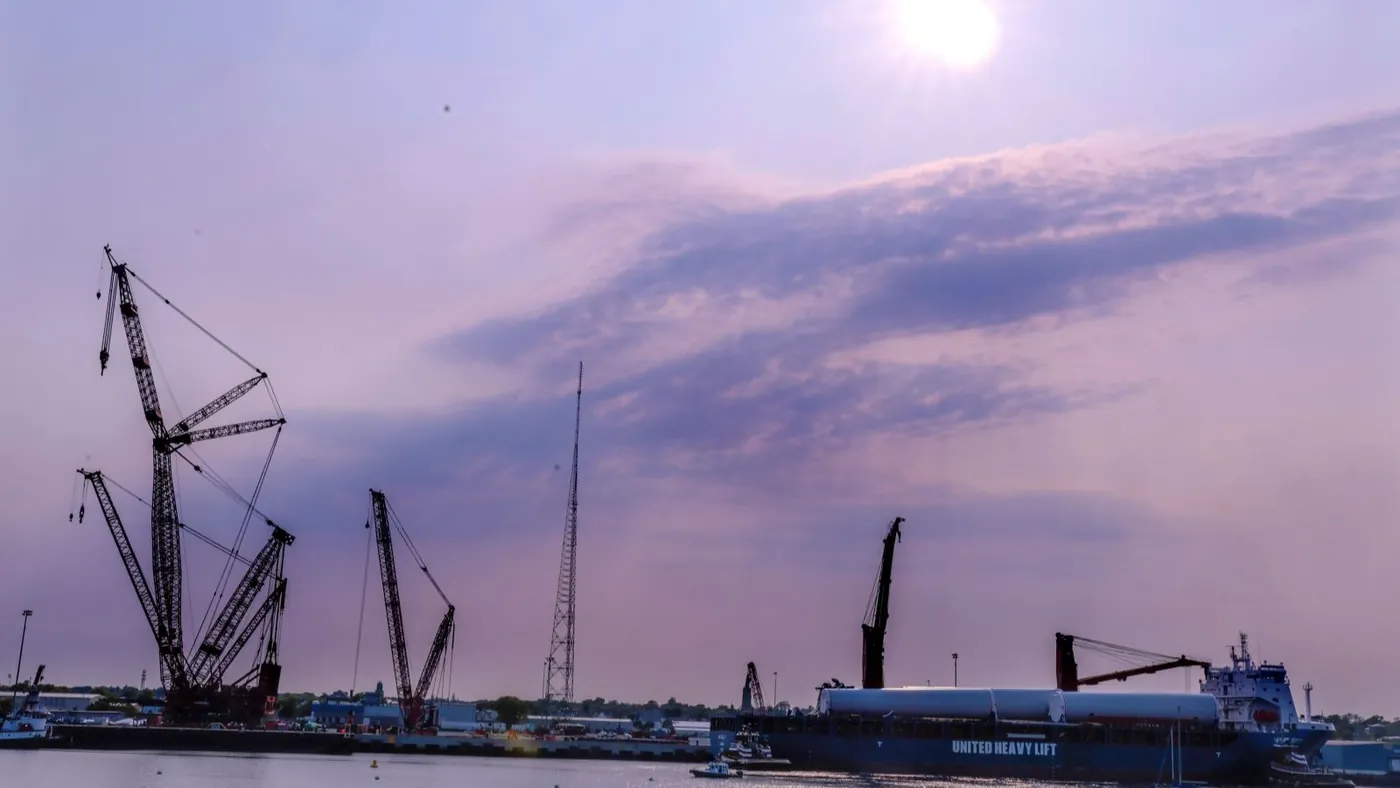
With congested, aging power lines and a densely developed landscape, the East Coast has few options for building large-scale renewable power.
Meanwhile, the region’s electricity prices are rising, and ...
Grist home Donate Sign up for The Weekly We hand-package the week’s best Grist stories .
Donate Sign up for The Weekly We hand-package the week’s best Grist stories .
With congested, aging power lines and a densely developed landscape, the East Coast has few options for building large-scale renewable power.
Meanwhile, the region’s electricity prices are rising, and states are falling behind their emissions goals.
Offshore wind offered a unique opportunity to meet those challenges, experts say, but the industry is barely surviving under economic headwinds and an openly hostile federal government.
Offshore wind isn’t dead, but advocates agree that the technology is fading just when the region needs it most.
Offshore wind developers, who had already struggled with high construction costs, hit a minefield when the Trump administration took office in 2025.
The administration has subjected offshore wind projects to questionable Pentagon reviews, permit revocations, and stop-work orders, some of which survived only briefly before being blocked by courts.
The administration’s most consequential move may have been its decision to pay developers to surrender their rights to develop in federally managed waters.
By mid-August, it had committed to roughly $4 billion in payouts, wiping an estimated 21 gigawatts of potential wind power capacity off U.S.
coasts, or enough energy to power over 15 million average-sized U.S.
As they wait for conditions to improve, the industry must push through what offshore wind experts describe as an irked malaise.
To support our nonprofit environmental journalism, please consider disabling your ad-blocker to allow ads on Grist.
Here's How “Companies are trying to be upbeat, but I think if you kind of peel back the layers a bit, there’s a number of emotions out there; anger, sadness,” said Mark Repsher, an energy and sustainability expert at PA Consulting.
“These people like what they do … sometimes it’s been their whole career, and it’s been put on pause now.” At least nine companies are still holding onto their offshore wind development rights, most of them European energy giants like Shell, and at least some appear unlikely to strike a deal.
Denmark-based Orsted, the world’s largest developer of offshore wind energy, and the Spanish company Avangrid are the largest remaining leaseholders, with five and six undeveloped leases, respectively.
Related News
- Power GenerationU.S. electricity use for electric vehicles increasing at a slower pace in 2026
- Power GenerationEquinor to feed Dutch grid with low-emission Norwegian gas through 2031
- Power GenerationInter-array cable installation about to start at 2.9 GW UK offshore wind farm
- Power GenerationØrsted expands offshore wind ROV fleet with third Saab electric subsea robot
- Power GenerationCoastal gridlock: California’s infrastructure ban and Gulf pushbacks trigger an energy tug-of-war
- Power GenerationAfentra partners send Borr Grid rig to Impala-2 ahead of Pacassa SW sidetrack