Mining water know-how flows to remote communities
Water treatment solutions developed for mining are being tested in remote communities, where groundwater can fail Australian drinking water quality guidelines.
Blog icon Search Quick links Climate change COVID-19 research Diets Staff profiles Mining water know-how flows to remote communities Water treatment solutions developed for mining are being tested in remote communities, where groundwater can fail Australian drinking water quality guidelines.
Poet Dorethea Mackeller may celebrate a sunburnt country, but Australia’s dry and arid inland poses a less romantic reality for some remote and regional communities, where access to clean, reliable water is a daily challenge.
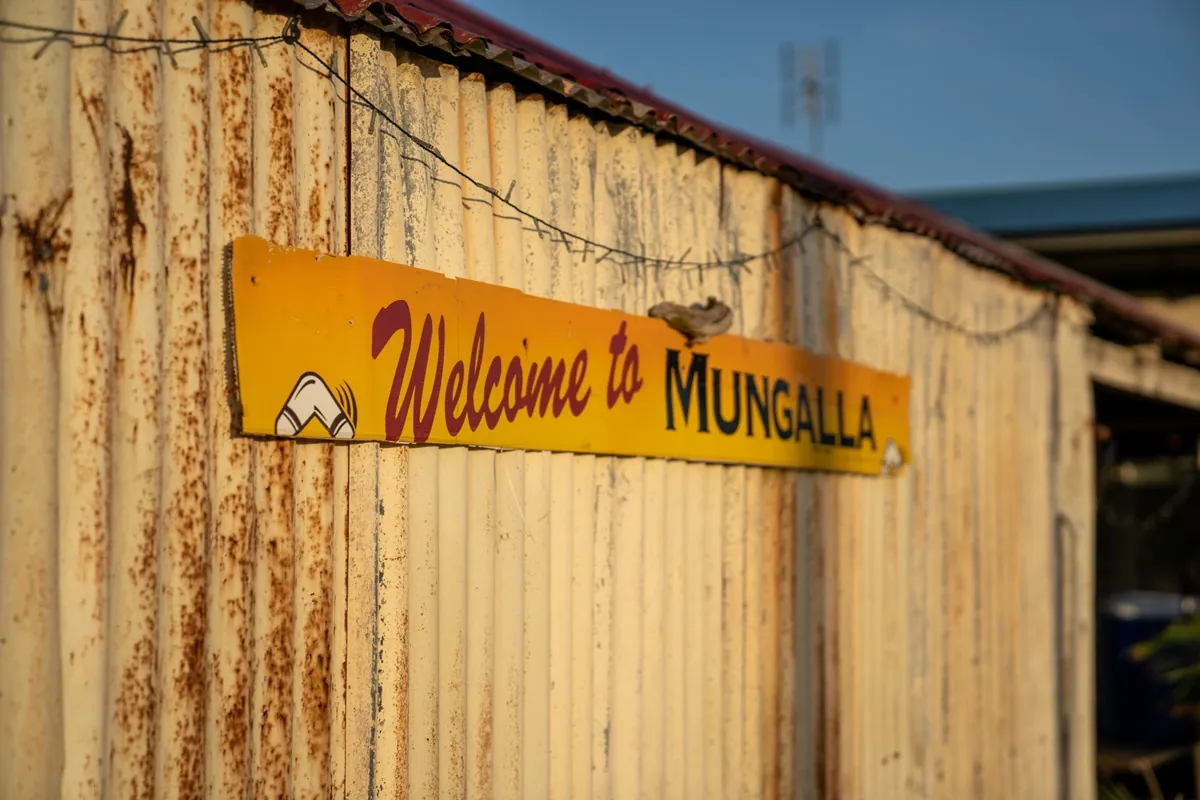
Mungalla Station near Ingham in North Queensland is owned by the Nywaigi Traditional Owners who operate history and cultural tours.
The mains water is piped along the road, passing the front gate – more than a kilometre from the homestead.
The historic cattle station and leading ecotourism site must truck water in for Mungalla’s guests, including tourists and school groups, who visit the station to go on tours or stay at the campground.
Mungalla Station in North Queensland, owned and operated by the Nywaigi Traditional Owners, is a leading ecotourism site operating history and cultural tours.
© Mungalla Bore water - water pumped from groundwater sources like underground aquifers - is available at the station but the quality is not fit for direct use.
“Town water is available at the entry of Mungalla Station along Forest Beach Road but needs to be plumbed into the Homestead, approximately 1.2 kilometres," said community spokesperson Jacob Cassady.
"If our bore water was fit for consumption, it would provide a year-round safe water supply that is also suitable for drinking,” Continuous access to potable water is a luxury in parts of remote Australia.
Seventy per cent of our country’s land mass is classed as arid or semi-arid.
Water resources may be scarce and what water there is in some remote locations can be unfit for human consumption.
Groundwater carries with it whatever the surrounding rock contains.
Often that’s a lot of salts and, in some instances, microbial contamination, which renders the water unsafe for humans.
Water resources are also susceptible to climate and weather variabilities.
Australia has warmed by 1.51°C since 1910 , and though changes in rainfall patterns vary widely, streamflow has fallen at more than a quarter of the country’s reference river gauges.
Meanwhile, national water consumption rose 12.9 per cent in 2023-24 .
Mine operations, ore processing, tailings management, cooling and dust suppression require water and the management of mine impacted water from many of these operations is difficult to treat.
Water engineers treat water that is often saline, acidic, and / or heavy with dissolved minerals.
In February, Geoscience Australia estimated that mining accounts for 11 per cent of gross domestic product and directly employs about 300,000 people .
Related News
- Water Treatment11 Missing as Drone Attacks Strike Two Ships Near NATO Waters
- Water TreatmentFast-track pipeline project raises alarms over water safety, reliance on fossil fuels
- Water TreatmentMexico breaks ground on new desalination plant in Rosarito to bolster region’s water supply
- Water TreatmentKiewit Picked for $757M Corpus Christi Desalination Plant
- Water TreatmentProposed Bacliff desalination plant raises concerns about Galveston Bay’s future
- Water TreatmentWhat you need to know about desalination, a growing source of drinking water