Japan prepares to pay for oil’s long way round
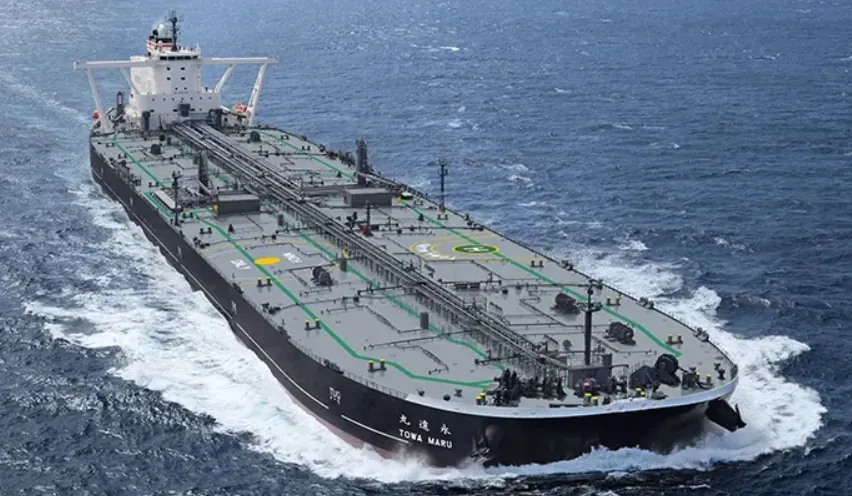
Japan is preparing to subsidise the additional cost of importing oil from suppliers outside the Strait of Hormuz, in a significant government intervention aimed at reducing the country’s dependence on the increasingly dangerous waterway.
The Japanese cabinet approved three bills yesterday designed to diversify energy imports, support tanker insurance and finance alternative oil transport infrastructure.
… Menu Asia Finance and Insurance Middle East Tankers Japan prepares to pay for oil’s long way round Sam Chambers October 14, 2026 0 401 3 minutes read NYK NYK Japan is preparing to subsidise the additional cost of importing oil from suppliers outside the Strait of Hormuz, in a significant government intervention aimed at reducing the country’s dependence on the increasingly dangerous waterway.
The Japanese cabinet approved three bills yesterday designed to diversify energy imports, support tanker insurance and finance alternative oil transport infrastructure.
The proposed legislation would establish a grant scheme compensating refiners, trading houses and petrochemical companies for part of the additional cost of sourcing crude and petroleum products from alternative suppliers.
Japan sourced 94% of its crude oil imports from the Middle East last year, with government figures putting its dependence on the Strait of Hormuz at 93%, although the latter measure is based on countries of origin rather than actual tanker movements.
Diversifying towards suppliers such as the US would substantially increase tonne-miles and shipping costs.
Diversifying towards American crude would substantially increase tonne-miles.
Tanker voyages from the US Gulf Coast to Japan via the Cape of Good Hope can take 45 to 60 days, or 35 days via the Panama Canal, compared with roughly 20 to 30 days from the Middle East.
The funding scheme would be administered by state-backed Japan Organization for Metals and Energy Security (JOGMEC), using contributions collected from oil importers.
A second bill addresses another increasingly serious obstacle to energy shipments: marine insurance.
Tokyo wants to partially cover hull and cargo insurance claims when international reinsurers are unable to provide protection because of geopolitical risks.
Separate changes to shipping insurance legislation would extend existing government-backed protection and indemnity arrangements beyond crude oil to petroleum products and LNG.
The third bill would give JOGMEC additional powers to invest in and guarantee financing for overseas pipelines providing alternative export routes.
Industry minister Ryosei Akazawa said the legislation was intended to fundamentally strengthen Japan’s energy supply security.
The government hopes to secure parliamentary approval during the current extraordinary Diet session.
Investment banks are increasingly contemplating a Hormuz crisis stretching into 2027.
HSBC describes a disrupted “new normal” in which the strait remains persistently impaired, while Goldman Sachs has revised its oil forecasts on the assumption that Middle Eastern shipping disruption continues into next year.
JPMorgan has gone further, modelling a “forever conflict” scenario in which Brent averages $87 a barrel in 2027.
ING’s September base case envisaged an agreement around November’s US midterm elections, while Citi still sees scope for oil prices to retreat sharply next year if shipping normalises.
Other major importers have adopted different approaches as the Hormuz shipping crisis drags on.
India launched a $1.5bn maritime insurance pool in May, backed by a $1.4bn sovereign guarantee, to maintain war-risk and other cover for India-linked voyages.
South Korea earmarked Won1.4bn ($1.05m) to subsidise surging war-risk insurance premiums for smaller shipping companies, initially targeting nine vessels, alongside a broader programme of credit guarantees, emergency financing and domestic insurance support.
China, the world’s largest crude importer, has taken a different approach, relying on strategic oil stockpiles, diversified suppliers and overland pipelines from Russia and Kazakhstan to cushion disruption.
Beijing has also pressed diplomatically for the restoration of shipping through Hormuz.
Unlike India and South Korea, however, it has not publicly announced a comparable government-backed tanker insurance subsidy.
Related News
- LNGSuper El Niño Could Ease Asia’s LNG Supply Concerns
- LNGPakistan Faces $1 Billion LNG Bill This Winter
- LNGShell Slams Australia's Plan to Force LNG Producers to Supply Domestic Market
- LNGChina’s $3 Billion Qatar LNG Deal Raises an Awkward Question
- LNGShell, GTT, and Lloyd’s Register eye hybrid-electric LNG carrier design
- LNGNew wind for hydrogen-electric shipping as GMI-PowerCell collaboration expands to four bulk carriers