Hormuz shock briefly makes biofuel the cheapest bunker option
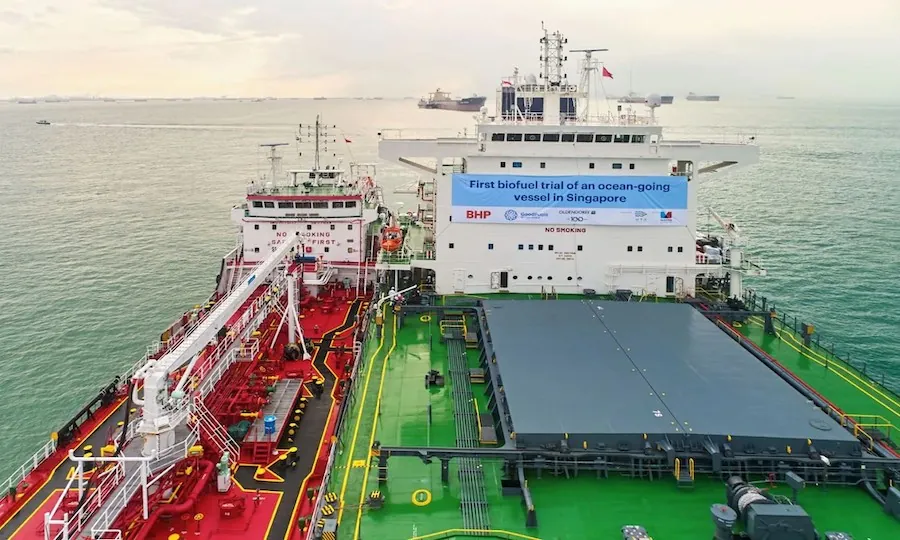
The upheaval in global energy markets caused by the war in the Middle East has produced an unexpected winner in the marine fuels market, with biodiesel briefly emerging as the cheapest bunkering option in Rotterdam once European carbon costs are factored in.
A new white paper from energy pricing specialist General Index and the London … Menu Bunkering Hormuz shock briefly makes biofuel the cheapest bunker option Sam Chambers October 14, 2026 0 395 2 minutes read BHP BHP The upheaval in global energy markets caused by the war in the Middle East has produced an unexpected winner in the marine fuels market, with biodiesel briefly emerging as the cheapest bunkering option in Rotterdam once European carbon costs are factored in.
A new white paper from energy pricing specialist General Index and the London Stock Exchange Group (LSEG) reveals that B30, a blend of 30% used cooking oil methyl ester (UCOME) and 70% very low sulphur fuel oil (VLSFO), became $74.61 per tonne cheaper than conventional VLSFO in April.
The calculation incorporates EU Emissions Trading System (ETS) allowances and potential FuelEU Maritime penalties.
In the preceding three months, B30 had been between $11 and $27 per tonne more expensive than conventional VLSFO on the same basis.
The researchers also found that B100 UCOME, after incorporating carbon costs, traded at a discount to marine gasoil for eight weeks between March and May.
The reversal came as the closure of the Strait of Hormuz sent fossil fuel prices soaring.
Between February and March, average European gasoil prices climbed $476 per tonne, while UCOME increased just $65.
The report, Lessons From Hormuz: Disruptions For Renewable Fuel Cost Competitiveness, argues that carbon pricing is beginning to demonstrate its effectiveness in making renewable marine fuels commercially competitive.
However, the authors caution against interpreting the figures as evidence of a permanent shift.
Biofuels remain generally more expensive than conventional bunkers before carbon costs are included.
The Rotterdam comparisons also incorporate potential regulatory penalties rather than necessarily reflecting costs incurred by every vessel.
The study, authored by General Index lead analyst David Elward and LSEG senior analyst Tim Deehan, examines how different renewable fuels responded to the energy shock.
While traditional biodiesels proved relatively resilient, hydrotreated vegetable oil and sustainable aviation fuel (SAF) prices rose sharply alongside their fossil equivalents.
SAF prices jumped $636 per tonne between February and March despite having supply chains largely independent of Hormuz.
The findings highlight a widening difference between shipping and aviation.
While EU carbon regulations briefly made marine biofuels the cheaper compliance option, the researchers calculate aviation would need carbon prices of around $445 per tonne of CO2 equivalent, roughly five times prevailing levels, to close the gap between SAF and conventional jet fuel.
Related News
- LNGSuper El Niño Could Ease Asia’s LNG Supply Concerns
- LNGPakistan Faces $1 Billion LNG Bill This Winter
- LNGShell Slams Australia's Plan to Force LNG Producers to Supply Domestic Market
- LNGChina’s $3 Billion Qatar LNG Deal Raises an Awkward Question
- LNGShell, GTT, and Lloyd’s Register eye hybrid-electric LNG carrier design
- LNGNew wind for hydrogen-electric shipping as GMI-PowerCell collaboration expands to four bulk carriers