Hinkley Point C could be delayed to 2031 and cost up to £35bn, says EDF
As nuclear plant is hit by further delay, real cost will be far higher after inflation is included, as project uses 2015 prices The owner of Hinkley Point C has blamed inflation, Covid and Brexit as ...
Sign in In 2007, the then EDF chief executive said that by Christmas in 2017, turkeys would be cooked using electricity generated from atomic power from Hinkley.
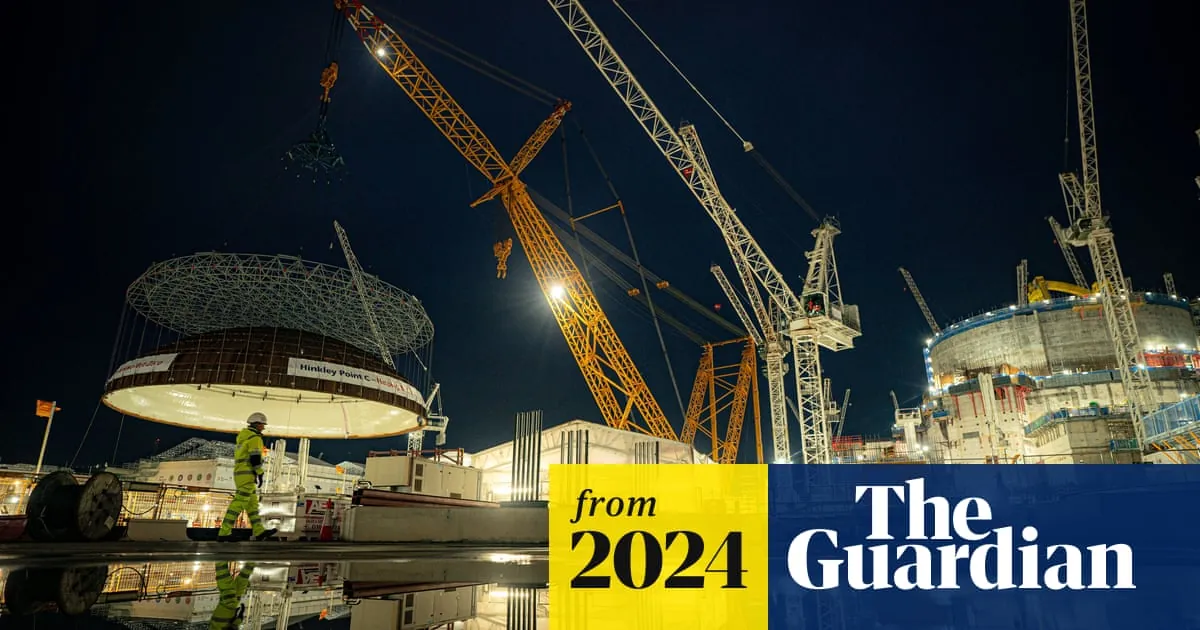
Photograph: Ben Birchall/PA View image in fullscreen In 2007, the then EDF chief executive said that by Christmas in 2017, turkeys would be cooked using electricity generated from atomic power from Hinkley.
Photograph: Ben Birchall/PA Energy industry This article is more than 2 years old Hinkley Point C could be delayed to 2031 and cost up to £35bn, says EDF This article is more than 2 years old As nuclear plant is hit by further delay, real cost will be far higher after inflation is included, as project uses 2015 prices Prefer the Guardian on Google The owner of Hinkley Point C has blamed inflation, Covid and Brexit as it announced the nuclear power plant project could be delayed by a further four years, and cost £2.3bn more.
The plant in Somerset , which has been under construction since 2016, is now expected to be finished by 2031 and cost up to £35bn , France’s EDF said.
However, the cost will be far higher once inflation is taken into account, because EDF is using 2015 prices.
The latest in a series of setbacks represents a huge delay to the project’s initial timescale.
In 2007, the then EDF chief executive Vincent de Rivaz said that by Christmas in 2017, turkeys would be cooked using electricity generated from atomic power at Hinkley.
When the project was finally given the green light in 2016, its cost was estimated at £18bn.
“Like other major infrastructure projects, we have found civil construction slower than we hoped and faced inflation, labour and material shortages, on top of Covid and Brexit disruption,” said Stuart Crooks, the project’s managing director, in a message to staff.
Crooks said: “Running the project longer will cost more money and our budget has also been affected by rising civil construction costs.
It is important to say that British consumers or taxpayers won’t pay a penny, with the increased costs met entirely by shareholders.” EDF had previously said that the first reactor unit at the nuclear site would be due to be complete by June 2027 , with a 15-month buffer period which was likely to be used – putting its completion at September 2028, and a further year for the second unit.
It costs were estimated between £25bn and £26bn, and this was later revised up to £32.7bn in February 2023.
EDF gave three scenarios, ranging from becoming operational is 2029, to delays pushing this back to 2031.
It said that the cost of completing Hinkley will be between £31bn and £34bn, although if completion is delayed to 2031 costs would rise to £35bn.
In December it emerged EDF’s partner in the project, China General Nuclear, had halted funding for Hinkley.
The move came after the government took over CGN’s stake in Hinkley’s proposed sister site, Sizewell C in Suffolk, stripping the Chinese state-owned company of its role in the project.
The latest financial estimates are based on accounting in 2015 figures, meaning the total cost of the project could be far higher when inflation over the last decade is factored in.
Hinkley’s ballooning costs have proved controversial with French taxpayers, which are picking up the tab.
Hinkley Point C and Sizewell C are expected to herald a new era of nuclear plants touted by the government.
Last year the government launched a delivery body, Great British Nuclear, with the aim of accelerating the development of new nuclear projects.
Related News
- Power GenerationU.S. electricity use for electric vehicles increasing at a slower pace in 2026
- Power GenerationEquinor to feed Dutch grid with low-emission Norwegian gas through 2031
- Power GenerationInter-array cable installation about to start at 2.9 GW UK offshore wind farm
- Power GenerationØrsted expands offshore wind ROV fleet with third Saab electric subsea robot
- Power GenerationCoastal gridlock: California’s infrastructure ban and Gulf pushbacks trigger an energy tug-of-war
- Power GenerationAfentra partners send Borr Grid rig to Impala-2 ahead of Pacassa SW sidetrack