Europe’s biggest petrochemical plant in 30 years a ‘carbon bomb’, court to hear
Environment groups challenge decision to approve £3.5bn Ineos facility in Antwerp saying it will make climate crisis worse The biggest petrochemical plant to be built in Europe in 30 years will be a ...
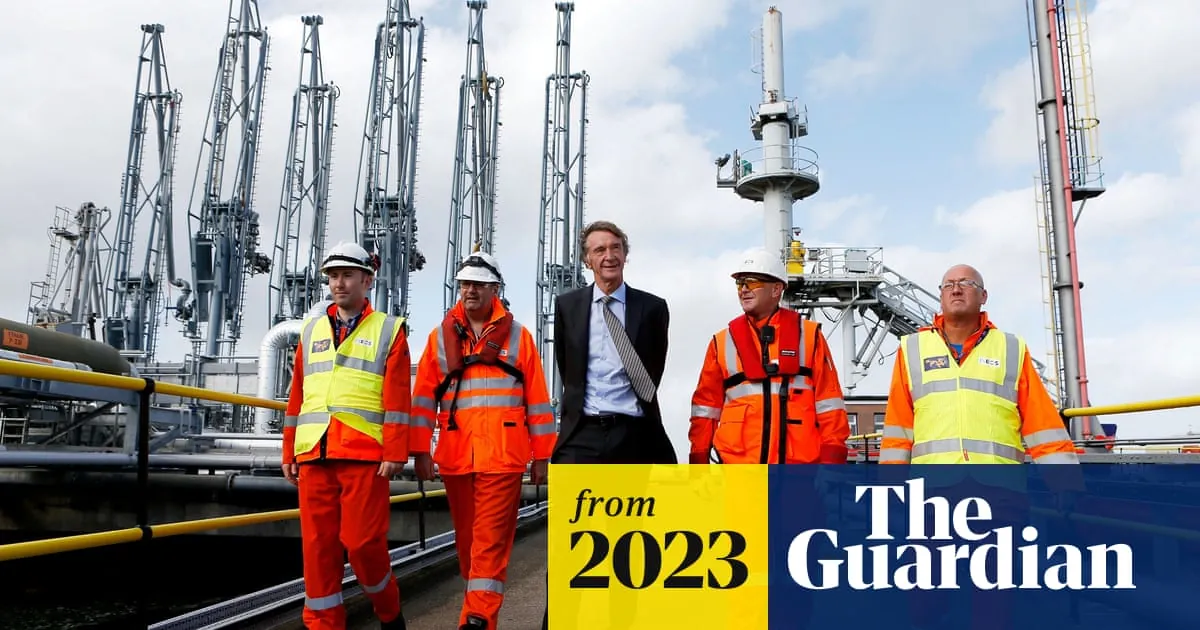
Sign in Ineos owner Jim Ratcliffe (centre) won approval to build the plant in 2021.
Environmentalists say it will contribute to increases in plastic production on a scale never seen before in Europe.
Photograph: Russell Cheyne/Reuters View image in fullscreen Ineos owner Jim Ratcliffe (centre) won approval to build the plant in 2021.
Environmentalists say it will contribute to increases in plastic production on a scale never seen before in Europe.
Photograph: Russell Cheyne/Reuters Oil and gas companies This article is more than 3 years old Europe’s biggest petrochemical plant in 30 years a ‘carbon bomb’, court to hear This article is more than 3 years old Environment groups challenge decision to approve £3.5bn Ineos facility in Antwerp saying it will make climate crisis worse Prefer the Guardian on Google The biggest petrochemical plant to be built in Europe in 30 years will be a “carbon bomb” that will worsen the climate crisis and threaten human life, environmental groups including the NGO ClientEarth will argue in court.
Fuelled by ethane from shale gas fracking in the United States, the “cracking” plant to be built in Antwerp by Sir Jim Ratcliffe’s company Ineos will create ethylene and contribute directly to huge increases in plastic production on a scale not seen in Europe, they argue.
ClientEarth and 13 other organisations will say in a Flemish court on Tuesday that the plant, known as Project One, should never have been given the go-ahead by authorities.
They say the permit infringes EU environmental regulations and will adversely affect the climate, air quality and human health, as well as protected natural areas.
Increased global heating, pollution from plastic pellets, excessive nitrogen deposits, particularly in protected natural areas, and the health implications of increased air pollution from the cracking plant are all cited as serious negative affects of the plant going ahead.
“This will be the largest petrochemical plant in Europe to be built in the last 30 years,” said Tatiana Lujan, a lawyer from ClientEarth.
“It is a carbon bomb which will impact human health and the environment.
“In the time this case has been running, the evidence of the environmental and human harm that extracting and using petrochemicals to make plastics has snowballed.
Meanwhile Ineos continues to fight to grow the industry.
“We’re in court to make sure that the true impacts of Project One are heard and understood, and the right decisions are made.” ClientEarth and its partners, which include organisations fighting plastic pollution, say the permit for the plant failed to take into account indirect climate effects as required by EU legislation.
They say the greenhouse gas emissions created by the plastic production from the ethylene have not been mapped out completely.
The NGOs argue that Antwerp authorities, which granted the permit in December 2021, failed to consider the plant’s lifetime greenhouse gas emissions, as well as the damage nitrogen pollution would wreak on local wildlife, and that as a result the approval was illegal under EU and national laws.
Using intense heat and pressure, the plant will “crack” the bonds in ethane gas to create ethylene, which can then be turned into polyethylene, used to make packaging and plastic bottles.
ClientEarth argues that the main consumer of the ethylene produced at the plant will be Ineos Manufacturing Belgium , which produces consumer plastic and in 2018 obtained a permit to expand its plastic production to 780,000 tonnes a year.
The NGO says scientific evidence of the harmfulness of plastics to human health, biodiversity and the climate is increasingly compelling.
The United Nations says the impacts of plastic production and pollution on planetary crisis of climate change, nature loss and pollution are a catastrophe in the making.
The Dutch border lies 2.5 miles (4km) from the plant, and separately the authorities in Zeeland and North Brabant are challenging the granting of the permit to Ineos.
Related News
- PetrochemicalGlobal Petrochemicals Capacity and Capital Expenditure Outlook Report 2025-2030: Asia to Lead Petrochemical Growth with $291 Billion Investments
- PetrochemicalEpisode 20: Invisible Resin Protecting Exposed Chips at Sumitomo Bakelite's Utsunomiya Plant | Keihin-Keiyo Petrochemical Hub Stories
- PetrochemicalPemex raises Mexico petrochemical plant death toll to 28
- PetrochemicalIran prepares to import electricity from Turkey for petrochemical plants
- PetrochemicalUkraine Strikes Petrochemical Plant Deep Inside Russia As Battle For Pokrovsk Rages
- PetrochemicalCM to open Rs 6K-cr phenol-acetone plant in Haldia today