Data center, ‘pop-up’ power plant fined just $41,500 after starting without permit
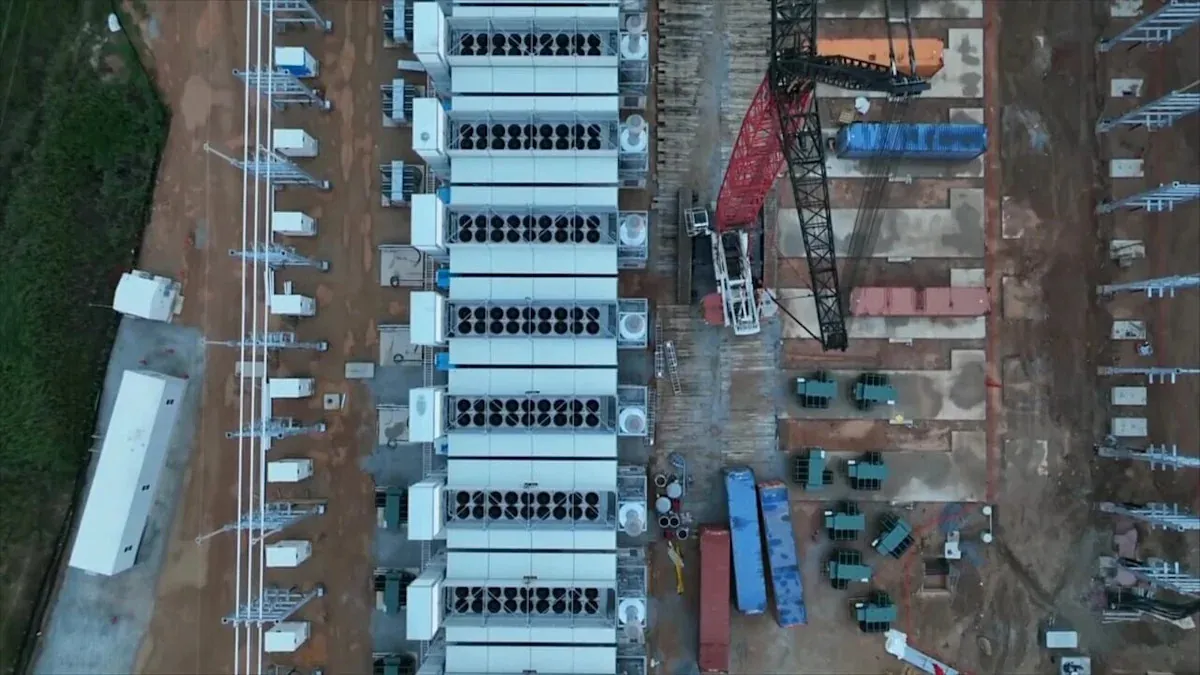
A data center and the temporary power plant built to support it now have their construction permits, after agreeing to pay a combined $41,500 in state penalties for starting construction before ...
Skip to main Home News Finance Sports More Mail Search the web Advertisement Advertisement Return to Homepage Follow Data center, ‘pop-up’ power plant fined just $41,500 after starting without permit Michael Doudna Tue, October 6, 2026 at 3:03 AM UTC 2 min read Add Yahoo as a preferred source to see more of our stories on Google.
A data center and the temporary power plant built to support it now have their construction permits, after agreeing to pay a combined $41,500 in state penalties for starting construction before receiving required air permits.
Channel 2 Action News reported in July that ServerFarm and the nearby VoltaGrid were told to stop construction after Newton County residents notified the state about building generators before the companies got the needed air permits.
Under separate consent orders, Georgia's Environmental Protection Division assessed an $11,500 penalty against VoltaGrid and a $31,000 penalty against ServerFarm.
State law allows civil penalties of up to $25,000 per day for violations of the Georgia Air Quality Act and related regulations.
Critics of the projects say the penalties are too small to serve as a severe punishment to companies investing millions of dollars into an assortment of projects.
"So clearly, those fines aren't any kind of deterrent to them," said Maurice Carter, president of Sustainable Newton.
Patrick Anderson, a senior attorney with the Southern Environmental Law Center, compared the penalties to a case in New Jersey where a data center operating without a permit received a penalty of more than $1 million.
According to the consent orders, both companies told regulators they misunderstood what construction activities were allowed before permits were issued.
The companies indicated they believed they could assemble the generators as long as the engines were not connected to fuel or power systems.
Despite concerns about the size of the penalties, both Carter and Anderson said the permitting process ultimately resulted in stricter environmental protections.
Carter says the final permit treats both companies (that operate next door to each other) as one permit, and will limit how long and how many generators can operate.
According to Anderson, combining the facilities under a revised permitting approach reduced emissions by about 20% compared with the original proposal.
"Whatever fine they pay year after year after year is not going to protect the people of Covington or Newton County.
But not being able to run those engines will," Carter said.
However, Carter said lawmakers should consider stronger penalties and oversight measures to discourage future projects from violating state law.
The Georgia Public Service Commission could also fine these companies, but that requires an investigation and public hearings.
That process is still in its early stages.
Netherworld at 30: 2 new haunts, no 'terrifying' haunt for kids, more than 8 guests
Related News
- Power GenerationU.S. electricity use for electric vehicles increasing at a slower pace in 2026
- Power GenerationEquinor to feed Dutch grid with low-emission Norwegian gas through 2031
- Power GenerationInter-array cable installation about to start at 2.9 GW UK offshore wind farm
- Power GenerationØrsted expands offshore wind ROV fleet with third Saab electric subsea robot
- Power GenerationCoastal gridlock: California’s infrastructure ban and Gulf pushbacks trigger an energy tug-of-war
- Power GenerationAfentra partners send Borr Grid rig to Impala-2 ahead of Pacassa SW sidetrack