ABS and U.S. Department of Energy Sign MOU on Maritime Applications of Advanced Nuclear Technology
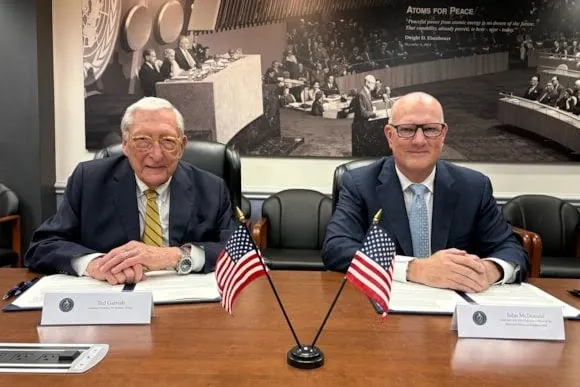
Department of Energy’s (DOE) Office of Nuclear Energy have signed a memorandum of understanding to advance modern commercial nuclear technology at sea.
Essential news coupled with the finest maritime content sourced from across the globe.
Photo caption (L to R): Ted Garrish, United States Assistant Secretary for Nuclear Energy, and John McDonald, ABS Chairman and CEO ABS and the U.S.
Department of Energy’s (DOE) Office of Nuclear Energy have signed a memorandum of understanding to advance modern commercial nuclear technology at sea.
The agreement spans floating power solutions, nuclear-powered vessels and the development of the ports, shipyards and industrial base needed to build and sustain them.
Key priorities include concept and feasibility studies for floating nuclear power and nuclear transportation corridors, and support for developing a U.S.
shipbuilding sector capable of building and operating nuclear-powered assets safely.
ABS will also coordinate related work through the U.S.
Center for Maritime Innovation (USCMI), for which ABS serves as Secretariat.
“Advanced nuclear technology is moving from concept to application, and the maritime industry needs to be ready for it,” said John McDonald, ABS Chairman and CEO.
“This agreement with DOE reflects the depth of work already underway and provides a framework to go further.
Through our collaborations with the DOE and industry leaders, ABS is pioneering the future of nuclear energy in maritime.
We’re well-positioned to help turn this technology into a safe, real and practical option for commercial maritime applications.” Essential news coupled with the finest maritime content sourced from across the globe.
Photo caption (L to R): Ted Garrish, United States Assistant Secretary for Nuclear Energy, and John McDonald, ABS Chairman and CEO ABS and the U.S.
Department of Energy’s (DOE) Office of Nuclear Energy have signed a memorandum of understanding to advance modern commercial nuclear technology at sea.
The agreement spans floating power solutions, nuclear-powered vessels and the development of the ports, shipyards and industrial base needed to build and sustain them.
Key priorities include concept and feasibility studies for floating nuclear power and nuclear transportation corridors, and support for developing a U.S.
shipbuilding sector capable of building and operating nuclear-powered assets safely.
ABS will also coordinate related work through the U.S.
Center for Maritime Innovation (USCMI), for which ABS serves as Secretariat.
“Advanced nuclear technology is moving from concept to application, and the maritime industry needs to be ready for it,” said John McDonald, ABS Chairman and CEO.
“This agreement with DOE reflects the depth of work already underway and provides a framework to go further.
Through our collaborations with the DOE and industry leaders, ABS is pioneering the future of nuclear energy in maritime.
We’re well-positioned to help turn this technology into a safe, real and practical option for commercial maritime applications.” DOE is leading U.S.
government initiatives on maritime nuclear applications.
Under the MOU, ABS will co-manage the Maritime Nuclear Applications Group (MNAG) and provide technical, regulatory, economic and policy support on concept and feasibility studies.
ABS will work with DOE to foster interagency coordination to develop a viable U.S.
Related News
- LNGSuper El Niño Could Ease Asia’s LNG Supply Concerns
- LNGPakistan Faces $1 Billion LNG Bill This Winter
- LNGShell Slams Australia's Plan to Force LNG Producers to Supply Domestic Market
- LNGChina’s $3 Billion Qatar LNG Deal Raises an Awkward Question
- LNGShell, GTT, and Lloyd’s Register eye hybrid-electric LNG carrier design
- LNGNew wind for hydrogen-electric shipping as GMI-PowerCell collaboration expands to four bulk carriers