'World-first' CCS platform for industrial decarbonization stands tall offshore UK
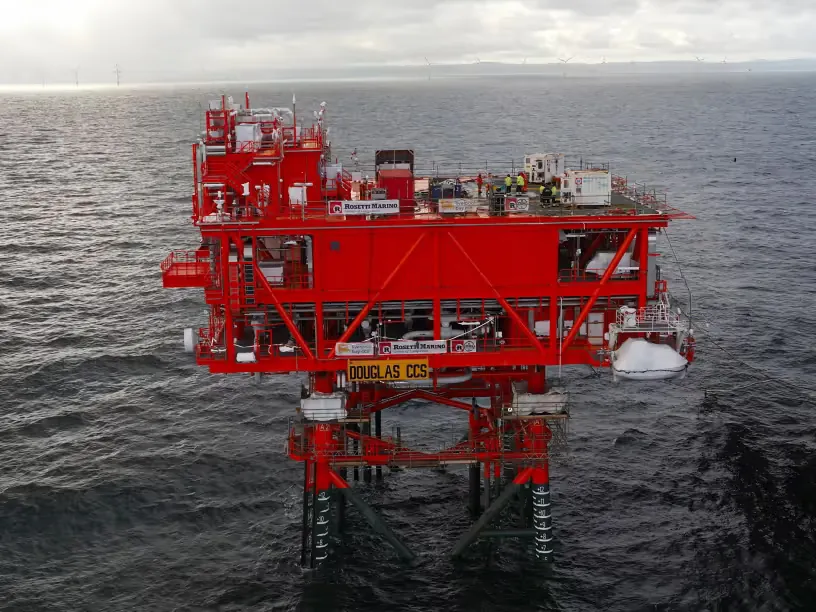
The installation of what is said to be the world's first offshore platform dedicated to CO2 transportation and storage for the decarbonization of...
2 minutes read LinkedIn X Email Eni The installation of what is said to be the world's first offshore platform dedicated to CO2 transportation and storage for the decarbonization of industrial sectors has been completed offshore the UK as part of the Liverpool Bay carbon capture and storage (CCS) project.
The new Douglas platform has been designed to operate as the offshore hub of the Liverpool Bay T&S system and will receive CO2 captured from industrial facilities across North West England and North Wales before distributing it through a network of existing offshore pipelines, which will be repurposed for CO2 transport to Eni's depleted natural gas reservoirs for permanent storage.
The structure comprises 1,885-ton topside facilities, a supporting jacket structure weighing 1,755 tons and eight foundation piles with a combined weight of 730 tons.
According to Eni, the platform was delivered in less than 18 months from contract award following an accelerated integrated engineering, procurement, construction, and commissioning (EPCI) program.
The construction of the entire Liverpool Bay CCS network is now approximately 50% complete.
3 min read Set to operate as the backbone of the HyNet industrial decarbonization cluster, the CCS project will feature the combination of purpose-built and repurposed infrastructure and will reuse over 75 miles of existing pipelines, three offshore structures and an onshore treatment plant, alongside 21 miles of new pipeline connecting industrial facilities across the region to the Liverpool Bay transport and storage network.
Related News
- Oil & GasNew England natural gas prices have been trading near record discounts to Henry Hub
- Oil & GasWeekly average load in ERCOT continues near record high
- Oil & GasDangote Swings to $4.7 Billion Profit Ahead of Africa’s Biggest IPO
- Oil & GasWhy Diesel Prices Are So Much Higher Than Gasoline
- Oil & GasSaudi Arabia Becomes the Oil Market’s Biggest Wild Card
- Oil & GasTrump Defends Russian Diesel Deal as Energy Ceasefire Claims Unravel