What Comes Next for Carbon Capture in the Power Industry?
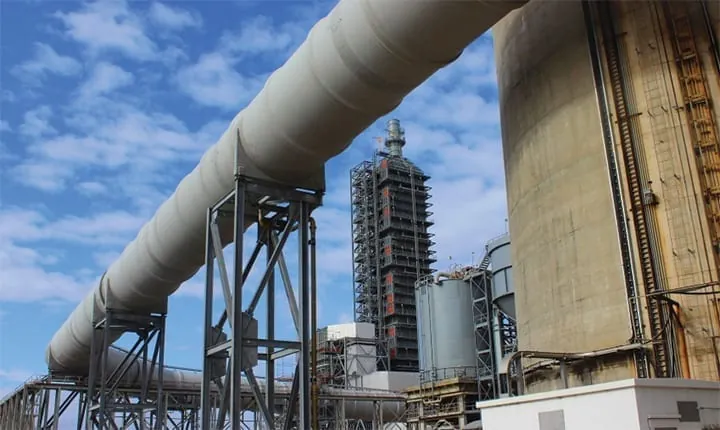
Policy upheavals have cast uncertainty over the future of carbon capture and storage in the power sector, though its momentum is widely expected to continue.
In November 2024, the Global CCS Institute ...
Search Sign In Home Legal & Regulatory What Comes Next for Carbon Capture in the Power Industry?
Legal & Regulatory What Comes Next for Carbon Capture in the Power Industry?
Patel Policy upheavals have cast uncertainty over the future of carbon capture and storage in the power sector, though its momentum is widely expected to continue.
In November 2024, the Global CCS Institute, an international think tank with headquarters in Melbourne, Australia, issued its annual overview of global progress for carbon capture and sequestration (CCS).
In a departure from previous years, it paints a picture of significant growth and a renewed sense of forward movement for CCS technologies.
“2024 has seen significant growth in CCS facility development.
50 facilities are now in operation (3 of which are dedicated transport and/or storage projects), and 44 are under construction (7 of these are transport and/or storage),” the report says.
As of July 2024, the pipeline includes 628 projects—a 60% year-on-year increase.
“Both in facility count and capacity, the project pipeline has reached record levels,” it notes.
“More significantly, the capture capacity of facilities under construction increased by 57%.” The “more than doubling of these projects in the past 12 months, from 121 to 247, is particularly noteworthy.” In addition, 222 transport/storage projects, which do not include capture, were in various stages of development, “showcasing significant capacity growth across all stages, including a 118% boost in the number of Advanced and Early Development projects.” Progress has been broad, with projects sprouting up in the U.S., Europe, the Middle East, China, and Southeast Asia, it notes.
The dramatic turnaround reflects a confluence of factors, including increasingly stringent climate targets, supportive government policies, technological advancements, and a growing recognition that CCS is indispensable for decarbonizing hard-to-abate sectors, said Jarad Daniels, Global CCS Institute CEO.
“The Institute has also identified over 50 bilateral agreements or memorandums of understanding (MoUs) executed by national governments since 2020 that include CCS within their scope,” he said.
Still, while the growth is “very encouraging, we still have a long way to go to attain the gigatonnes per annum of carbon management deployment, both point source and CDR [carbon dioxide removal], required to help reach net-zero and avoid the most severe consequences of global temperature rise.” For the power generation industry, these developments carry profound implications.
Long seen as a major source of CO 2 emissions, the industry has faced a rollercoaster of pressure to reduce its carbon footprint, and the recent surge in demand projected in regions like the U.S.
has pitted reliability against sustainability.
Experts draw CCS as a pragmatic pathway that could allow the sector to continue utilizing its fossil fuel-fired power plants—for baseload and peaking power—while drastically reducing their emissions.
But what is the true state of carbon capture in power generation, and can it truly deliver on that promise?
So far, only a handful of power generation projects have begun commercial operation since SaskPower’s 115-MW Boundary Dam 3 in Saskatchewan, Canada, became the world’s first coal-fired power facility to implement carbon capture successfully in 2014.
In 2017, Petra Nova near Houston, Texas, came online.
After a pause, it returned to service in September 2023.
Shenhua Guohua Jinjie Energy, a subsidiary of Shenhua Group, began operating a CCS facility at a coal-fired power plant located in the Jinjie Economic and Technological Development Zone in China’s Shaanxi province in 2021.
Related News
- EnergyLargest Carbon Capture Plant Removes The Equivalent Of 7,800 Cars Off The Road Each Year
- EnergyBrevik Carbon Capture Plant Reaches Mechanical Completion
- EnergyUH Researchers Develop Compact Carbon Capture Technology to Support Growing AI Infrastructure
- EnergyAker Carbon Capture ASA announces that SLB Capturi has completed its first modular carbon capture plant
- Power GenerationU.S. electricity use for electric vehicles increasing at a slower pace in 2026
- Oil & GasNew England natural gas prices have been trading near record discounts to Henry Hub