Types of centrifugal pumps and their distinguishing features
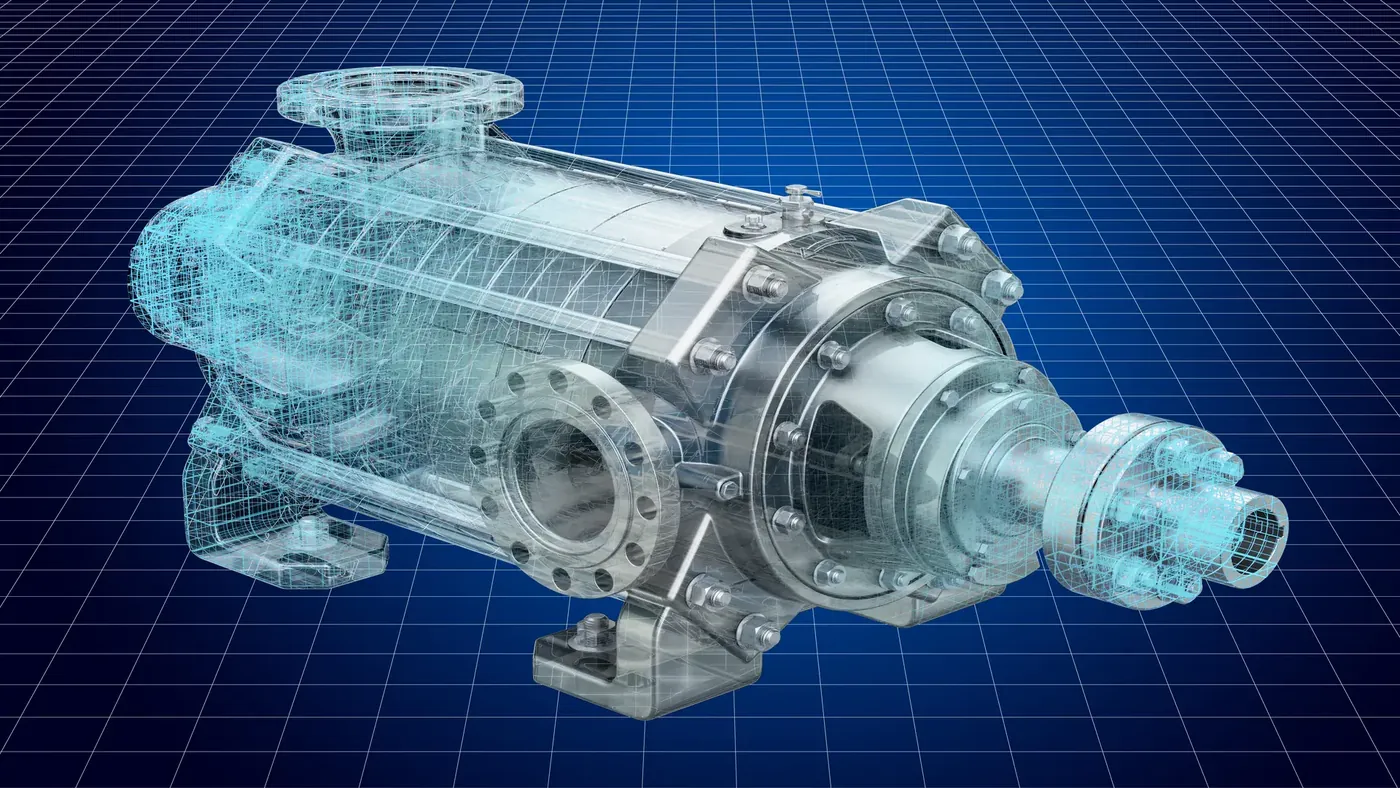
Centrifugal pumps are essential equipment in various industries due to their ability to transport liquids efficiently.
Their operating principle is based on the conversion of mechanical energy into ...
EN ES Types of centrifugal pumps and their distinguishing features Centrifugal pumps, industrial, transform mechanical energy into hydraulic energy, facilitating the efficient transport of liquids.
By José López on March 10, 2025 Table of Contents Introduction What is a centrifugal pump?
Basic operating principles of a centrifugal pump Types of centrifugal pumps Centrifugal volute pumps Centrifugal diffuser pumps Multistage centrifugal pumps Open impeller centrifugal pumps Closed impeller centrifugal pumps Self-adhesive centrifugal pumps Technological advances in centrifugal pump design Computational modeling and simulation Advanced materials Optimized impeller designs Intelligent control technologies Improved coupling and transmission systems Modular design Energy efficiency Geometry impellers Examples of specific industrial applications for each type of pump Centrifugal volute pumps Centrifugal diffuser pumps Multistage centrifugal pumps Open impeller centrifugal pumps Closed impeller centrifugal pumps Self-adhesive centrifugal pumps What is cavitation in pumps?
Causes of cavitation Effects of cavitation Cavitation prevention Types of flow in centrifugal pumps and their impact on efficiency Influence of flow type on cavitation Conclusions References Introduction Centrifugal pumps are essential equipment in various industries due to their ability to transport liquids efficiently.
Their operating principle is based on the conversion of mechanical energy into hydraulic energy by means of the centrifugal force generated by a rotating impeller.
These pumps stand out for their versatile design and wide range of applications in sectors such as water supply, chemical industry, wastewater treatment and power generation.
Over the years, centrifugal pumps have evolved in terms of their construction, shaft arrangement, number of impellers and hydraulic characteristics.
They can be classified into different types according to their suction, impeller shape and casing, thus allowing their adaptation to different operating conditions.
However, with technological advances and increasing demands for energy efficiency, sustainability and reliability, the industry has developed innovations in the design and materials of these pumps.
The most outstanding distinctive features are presented below.
A centrifugal pump is a type of hydraulic pump that uses the principle of centrifugal force to move liquids.
Its design consists of an impeller that rotates inside a casing, creating a flow of liquid.
These pumps are widely used in a variety of industrial applications, from water supply to chemical processes.
These pumps have a design that includes a volute (spiral casing) that converts the kinetic energy of the liquid into pressure.
The most outstanding distinctive features are presented below.
Diffuser pumps use a series of fixed vanes (diffusers) that convert fluid velocity into pressure.
With multiple impellers (stages) in series, these pumps can significantly increase the liquid pressure.
These pumps have an impeller with open blades, which allows solids and particles to pass through.
These pumps have an impeller with closed blades, which improves efficiency and performance.
Designed to prevent the liquid from draining completely from the impeller, these pumps are ideal for applications where cavitation is a problem.
Technological advances have improved the efficiency, durability and versatility of centrifugal pumps.
Related News
- PumpsElevated crack spreads and crude oil prices contribute to higher prices at the pump
- PumpsEgypt and Chevron seal Mediterranean oil & gas exploration deal
- PumpsGlobal Industrial Heat Pump Market Size, Share, Growth Trends, and Forecast 2026-2035 | Market to Reach USD 2.5 Billion as Decarbonization and Waste Heat Recovery Accelerate
- PumpsHeat Pumps Are Coming for Coal’s Industrial Heat Market
- PumpsIndustrial Heat Pumps and the Future of Sustainability
- PumpsGlobal Submersible Pumps Market - Industrial Applications, Growth, and Forecast 2026-2034 | Water Infrastructure and Smart Pumping Fuel 5.11% CAGR Toward US$21.2 Billion