The ABCs of Fire Pump Installations
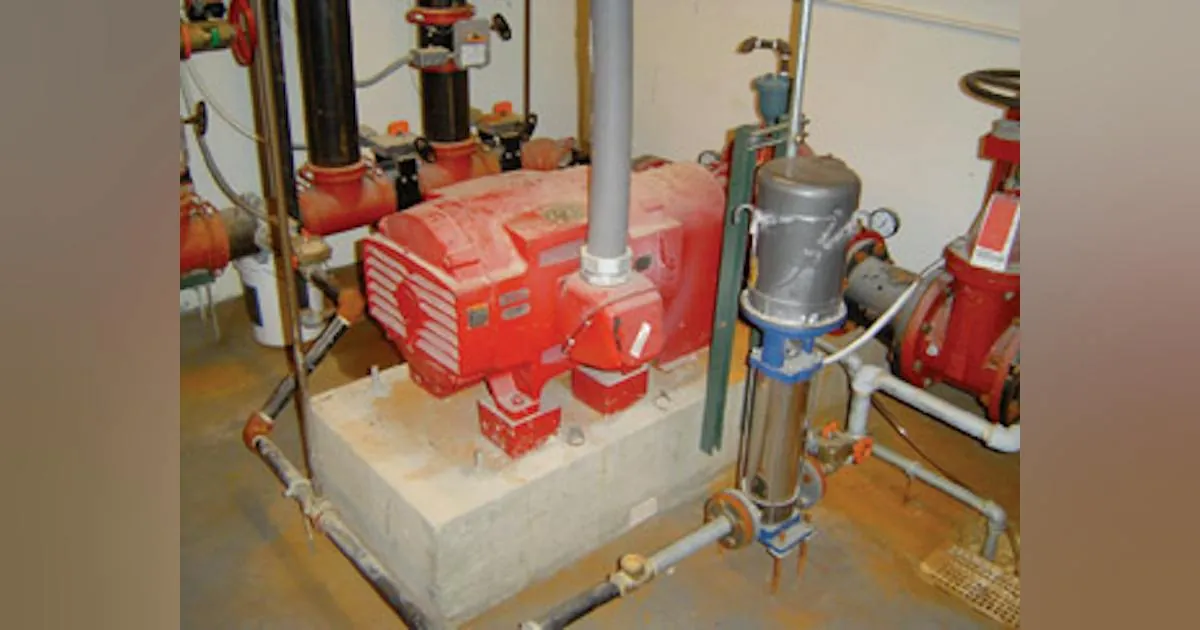
When it comes to fire pumps, there's more to designing and installing these units than meets the eye.
As projects become larger and more complex, such as those found in campus settings, installation ...
When it comes to fire pumps, there's more to designing and installing these units than meets the eye.
As projects become larger and more complex, such as those found in campus settings, installation requirements vary and design options increase, which often leads to confusion on the electrical design front.
Therefore, it's important to turn to more than Art.
695 of the NEC for guidance — there are other codes, standards, and local regulations you must become familiar with when doing this type of work.
Let's start from the beginning, outlining the requirements associated with various fire pump installations.
You receive notification that a particular project requires a fire pump.
Although there are other possibilities, you will have one of three basic scenarios to address.
The fire pump is going to be fed from: a single utility service point and an onsite generator.
For example, the International Building Code (Sec.
403.10.1.3) requires this arrangement in a high-rise building (more than 75 feet tall).
Another situation could be that the height of the building may be beyond the pumping capacity of the local fire department.
In this case, you must follow the rules of NFPA 20, “Standard for the Installation of Stationary Pumps for Fire Protection,” in Chapter 9, Sec.
Another example is simply that the owner requested this arrangement.
dual feeder sources (where one of the sources may or may not be a generator).
This would include a campus setting or a multi-building application and fall under the requirements of NEC Sec.
Let's begin with a review of the situation where you have one building, one fire pump, and one power source (from the utility).
The major issue is that you will need to run a dedicated feeder from the service transformer (just after the metering equipment) to the fire pump.
NEC 695.3 (A)(1) prevents you from coming off of the main service equipment.
Related News
- PumpsElevated crack spreads and crude oil prices contribute to higher prices at the pump
- PumpsEgypt and Chevron seal Mediterranean oil & gas exploration deal
- PumpsGlobal Industrial Heat Pump Market Size, Share, Growth Trends, and Forecast 2026-2035 | Market to Reach USD 2.5 Billion as Decarbonization and Waste Heat Recovery Accelerate
- PumpsHeat Pumps Are Coming for Coal’s Industrial Heat Market
- PumpsIndustrial Heat Pumps and the Future of Sustainability
- PumpsGlobal Submersible Pumps Market - Industrial Applications, Growth, and Forecast 2026-2034 | Water Infrastructure and Smart Pumping Fuel 5.11% CAGR Toward US$21.2 Billion