Scotland's only oil refinery confirmed to close next year
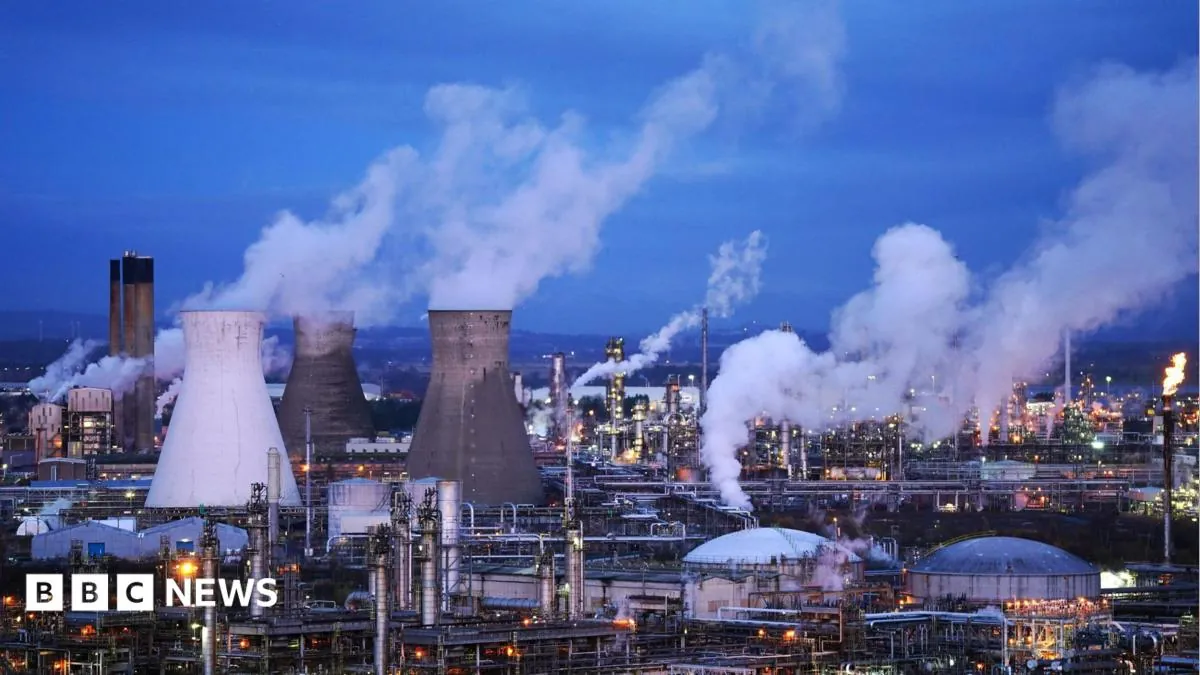
Scotland's only oil refinery is to close by the summer of next year, with the loss of 400 jobs.
Petroineos said the closure of Grangemouth was due to it being unable to compete with sites in Asia, ...
BBC News Scotland's only oil refinery confirmed to close next year Image source, PA Media Image caption, Petroineos announced their intention to close Grangemouth in November last year Scotland's only oil refinery is to close by the summer of next year, with the loss of 400 jobs.
Petroineos said the closure of Grangemouth was due to it being unable to compete with sites in Asia, Africa and the Middle East.
The company said the decision would "safeguard fuel supply for Scotland" by converting the site into a terminal able to import petrol, diesel, aviation fuel and kerosene into Scotland - but would require a workforce of fewer than 100 employees compared to the current 475.
The company announced last November it intended to close the plant, but union leaders had hoped the facility could remain open longer to provide time for a green alternative to be established at the site.
The BBC understands the refinery - the oldest in the UK - is currently losing around $500,000 (£383,000) a day and is on course to lose around $200m (£153m) in 2024.
Petroineos said they expected the new hub for finished fuels to open by early summer next year.
First Minister John Swinney said he was "deeply disappointed" at the news, while a joint three-point plan was unveiled by the Scottish and UK governments regarding the future of the site.
Workers said the announcement was a "kick in the teeth" while unions labelled it a "terrible indictment" of both governments and of the company.
It expanded into petrochemicals in the 1950s and serves as the primary supplier of aviation fuel for Scotland's main airports, while being a major supplier of petrol and diesel ground fuels across the Central Belt.
It accounts for about 14% of the UK's overall refining capacity and supplies almost two-thirds (65%) of demand for refined oil products in Scotland.
Ineos acquired the site in 2005 and are responsible for the entire plant, while the the refinery itself is owned by Petroineos - a joint venture between Ineos and PetroChina.
Petroineos stated that the size of the site meant that "high levels of capital expenditure each year" were spent on it, which outweighed the company's earnings.
Franck Demay, the company's CEO, said: "Demand for key fuels we produce at Grangemouth has already started to decline and, with a ban on new petrol and diesel cars due to come into force within the next decade, we foresee that the market for those fuels will shrink further.
"That reality, aligned with the cost of maintaining a refinery built half a century ago, means we are exploring ways to adapt our business.
“The action we are taking to create an import terminal will safeguard fuel supply for Scotland.
We currently expect Grangemouth to be ready to operate as a national distribution hub for finished fuels in Q2 next year." Between 250 to 280 of the redundancies are expected to occur in the three months after the plant closes, with 100 retained for between six to 12 months to help decommission and to build up the import business: , with a further 20 working on decommissioning and10 to manage demolition, which will continue until 2030.
20 jobs will go at Finnart on Loch Long, which is the pipeline terminal taking much of the Gulf of Mexico and South American crude oil.
Image caption, Workers marched in August to protest against the proposed closure In a social media post the first minister stated the Scottish government would work closely with the UK government to "deliver an investment plan" that would help to "secure an industrial future for the site".
This will see £100m of funding to support local energy projects, and examining options - via a feasibility study called Project Willow - to build a new long-term industry at the refinery site.
But a source close to the firm said even if such plans were viable they would not come in time to save the jobs which are expected to be lost next year.
Related News
- RefiningJapanese Refiners Buy Middle East Crude Through Ship-to-Ship Transfers
- RefiningWorld Gold Council urges miners to name refiners
- RefiningDangote's Kenya refinery triggers political battle
- RefiningExxon’s 11 Million-Gallon Refinery Goes Dark. How High Can Midwest Gas Prices Go?
- RefiningEthiopia PM announces launch of its first gold refinery
- RefiningMajor Russian oil refinery in flames after drone strike, Ukrainian General Staff confirms