New oil & gas discovery set to join North Sea fast-track plays fuelling Europe’s energy security
Equinor, Petoro, and TotalEnergies have found up to 50 million barrels in the North Sea and are eyeing first production in under three years.
Equinor, Petoro, and TotalEnergies have found up to 50 million barrels in the North Sea and are eyeing first production in under three years.
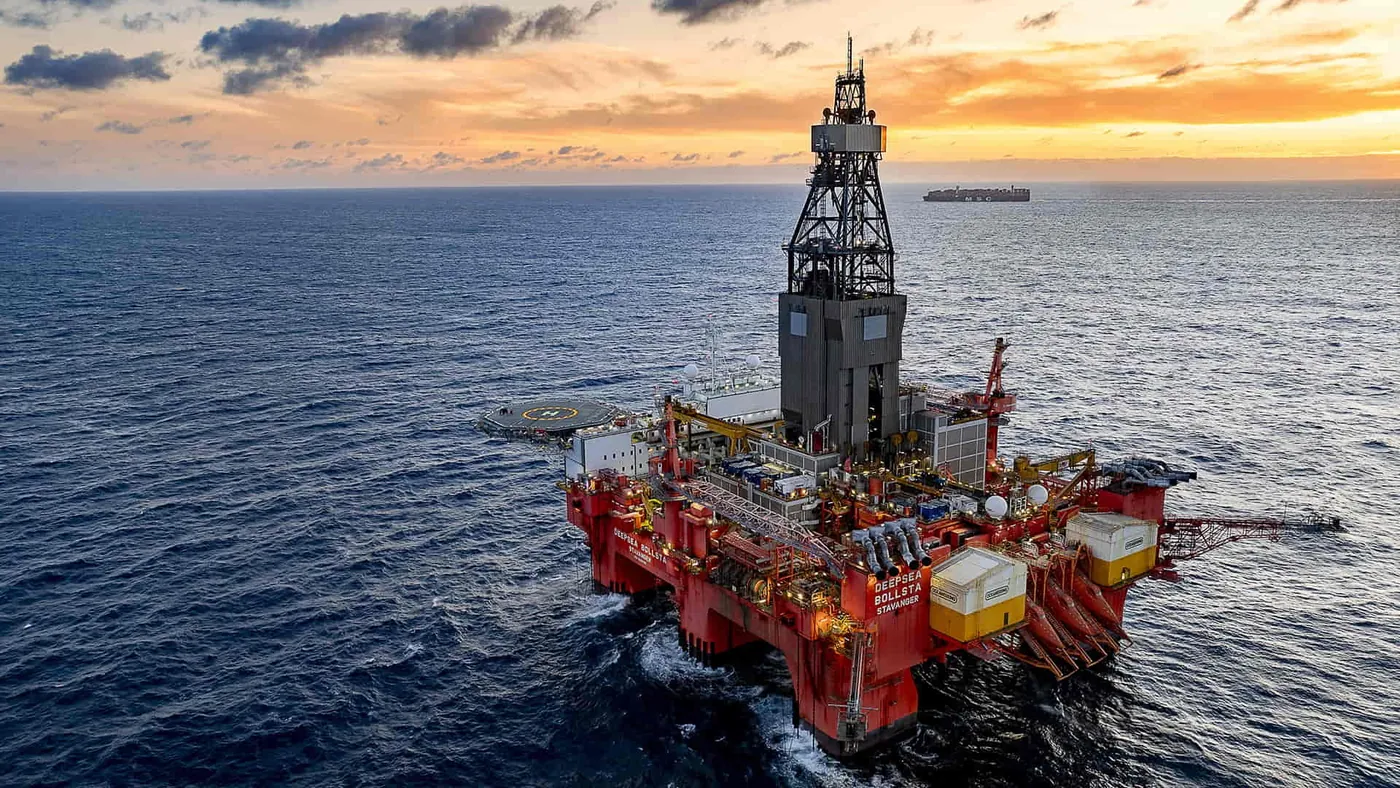
4 minutes read LinkedIn X Email Deepsea Bergen, former Bollsta, semi-submersible rig Source: Odfjell Drilling As declining mature fields threaten Europe's energy safety net, Norway’s state-owned energy giant Equinor and its partners are planning to waste no time to turn a fresh North Sea oil and gas discovery into fuel, betting on a fast-track playbook that slashes development timelines to just three years by plugging straight into existing infrastructure on the Norwegian Continental Shelf (NCS).
After striking between 19 and 50 million barrels of recoverable oil equivalent (boe), corresponding to 3-8 million standard cubic meters, at the exploration well 30/8-7 S, known as the Grimsnes prospect, near the Oseberg field , Equinor and its partners, Petoro and TotalEnergies, are planning a fast and cost-effective development.
The well was drilled in production license PL 190 by the Deepsea Bergen semi-submersible rig around 15 kilometers southwest of the Oseberg Sør platform and 145 kilometers west of Bergen.
According to the Norwegian Offshore Directorate, 30/8-7 S is the fifth exploration well to be drilled in production license 190 , which was awarded in the 14th licensing round on the NCS in 1993.
The well was drilled to a vertical depth of 3,752 meters below sea level and terminated in the Drake Formation in the Lower Jurassic, with extensive data collected and samples taken.
The water depth at the site is 96 meters.
The well has been permanently plugged and abandoned.
While the primary exploration target for the well was to prove petroleum in Middle Jurassic reservoir rocks in the Tarbert Formation, the secondary exploration target was to prove petroleum in Middle Jurassic rocks in the Ness and Etive formations.
Related News
- Oil & GasNew England natural gas prices have been trading near record discounts to Henry Hub
- Oil & GasWeekly average load in ERCOT continues near record high
- Oil & GasDangote Swings to $4.7 Billion Profit Ahead of Africa’s Biggest IPO
- Oil & GasWhy Diesel Prices Are So Much Higher Than Gasoline
- Oil & GasSaudi Arabia Becomes the Oil Market’s Biggest Wild Card
- Oil & GasTrump Defends Russian Diesel Deal as Energy Ceasefire Claims Unravel