How centrifugal pumps work-with video
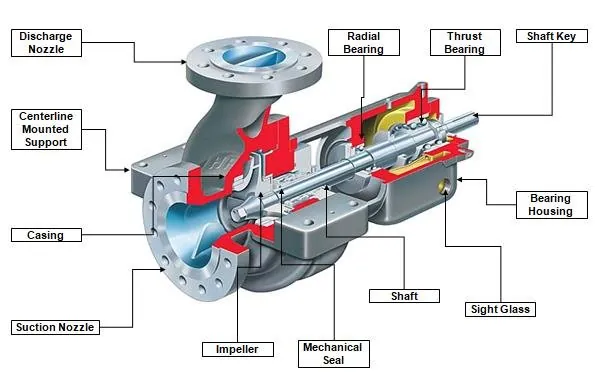
entrifugal pumps are the most common type of pump used in industry, agriculture, municipal (water and wastewater plants), power generation plants, petroleum and many other industries.
CCE NEWS Construction and Civil Engineering News News Construction Mining Machinery Tires Fabrication Coatings & Corrosion Events Geotechnical Surveying Market Intelligence Submit Post CCE NEWS Construction and Civil Engineering News News Construction Mining Machinery Tires Fabrication Coatings & Corrosion Events Geotechnical Surveying Market Intelligence Submit Post More Products How centrifugal pumps work-with video By Walter Diale February 20, 2020 Share Facebook Twitter WhatsApp Linkedin Email Add CCE NEWS on Google EVENTS SPOTLIGHT Steinexpo 2026 Set to Roar as 21 Heavy Machines Take Center Stage in Europe’s Biggest Live Quarry Showcase July 16, 2026 Top 15 New Equipment Launches at Hillhead 2026 You Shouldn’t Miss June 24, 2026 The Big Shift: Why InstallerSHOW 2026 is Now a Major Construction Event June 2, 2026 Women of FABTECH Canada 2026 to Spotlight the Next Generation of Female Manufacturing Leaders May 28, 2026 Stevens Equipment Rental set for ScotPlant debut April 2, 2026 Next-Gen Excavators Heading to Steinexpo: Efficiency, Automation & Power March 24, 2026 C entrifugal pumps are the most common type of pump used in industry, agriculture, municipal (water and wastewater plants), power generation plants, petroleum and many other industries.
They are the primary pump type in the class of pumps called “kinetic” pumps and are distinctly different than “positive displacement” pumps.
All centrifugal pumps include a shaft-driven impeller that rotates (usually at 1750 or 3500 RPM) inside a casing.
The impeller is always submerged in water, and when the pump is operational the impeller spins rapidly.
The centrifugal force applied to the water from this rotation forces the water outside of the casing, where it exits a discharge port.
More liquid is introduced through a suction port, or inlet.
The velocity imparted to the liquid by the impeller is converted to pressure energy or “head”.
Centrifugal pumps are unique because they can provide high or very high flowrates (much higher than most positive displacement pumps) and because their flowrate varies considerably with changes in the Total Dynamic Head (TDH) of the particular piping system.
This allows the flowrate to be “throttled” considerably with a simple valve placed into the discharge piping, without causing excessive pressure buildup in the piping or requiring a pressure relief valve.
Therefore, centrifugal pumps can cover a very wide range of liquid pumping applications.
As described above, one key advantage of centrifugal pumps is the ability to “throttle” their flowrates over a wide range.
Throttling centrifugal pumps with a discharge valve is not as energy-efficient as using a Variable Frequency Drive (VFD) to slow the pump/motor speed down, but it is much less expensive to install.
Of course, throttling a centrifugal pump’s flowrate has certain limits.
Related News
- PumpsElevated crack spreads and crude oil prices contribute to higher prices at the pump
- PumpsEgypt and Chevron seal Mediterranean oil & gas exploration deal
- PumpsGlobal Industrial Heat Pump Market Size, Share, Growth Trends, and Forecast 2026-2035 | Market to Reach USD 2.5 Billion as Decarbonization and Waste Heat Recovery Accelerate
- PumpsHeat Pumps Are Coming for Coal’s Industrial Heat Market
- PumpsIndustrial Heat Pumps and the Future of Sustainability
- PumpsGlobal Submersible Pumps Market - Industrial Applications, Growth, and Forecast 2026-2034 | Water Infrastructure and Smart Pumping Fuel 5.11% CAGR Toward US$21.2 Billion