Emerging Trends Shaping the Global Valve Market
The global valve market, a critical backbone of industrial infrastructure, is undergoing a significant transformation.
While often perceived as a traditional sector, the industry is experiencing a ...
The global valve market, a critical backbone of industrial infrastructure, is undergoing a significant transformation.
While often perceived as a traditional sector, the industry is experiencing a wave of innovation driven by digitization, sustainability mandates, and the demand for operational intelligence.
Once valued strictly for their mechanical resilience, modern valves are now strategic assets capable of generating data, optimizing performance, and mitigating environmental risk.
For industry leaders, utility managers, and investors, understanding these emerging trends is essential for navigating the evolving market landscape.
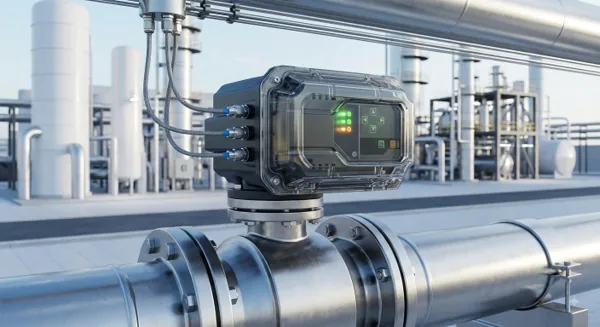
The most significant shift is the digital integration of valve technology, moving from simple mechanical components to "smart" nodes within the Industrial IoT.
Smart valves are equipped with sophisticated sensors and integrated microprocessors that do far more than open and close.
They continuously monitor critical parameters such as upstream and downstream pressure, flow rate, temperature, and acoustic signatures and transmit this data in real time to centralized control systems.
Traditional maintenance schedules are often reactive, addressing failures after they occur, or preventive, performing maintenance according to a fixed schedule.
Smart valves enable predictive maintenance.
By analyzing vibration and pressure anomalies, the system can predict a packing leak or actuator failure before it occurs.
This can significantly reduce costly unscheduled downtime and extend the asset lifecycle.
Furthermore, real-time data allows operators to fine-tune processes for maximum energy efficiency, optimizing flow dynamics across an entire plant.
Globally, industrial operators are facing stricter environmental regulations concerning fugitive emissions.
Methane leaks, volatile organic compounds (VOCs), and hazardous fluid releases are under increasing regulatory scrutiny.
This pressure is a major driver shaping valve design and selection.
The valve industry has responded with the development of low-emission (Low-E) valves.
These designs often utilize advanced packing systems, such as live-loaded PTFE or graphite, and improved stem finishes to minimize leakage over extended operating cycles.
Specialized double-block-and-bleed systems and bellows-sealed valves are increasingly common in critical applications, serving as additional barriers between the process media and the environment.
Related News
- ValvesIndustrial Valve Market by Valve Type, Size, Media, and End-Use Industry - Global Forecast to 2032 | Smart Valves and Infrastructure Investment Propel Market to USD 147.19 Billion
- ValvesAcquisition of Delta Industrial Valves: Weir Minerals expands valve offering
- ValvesIndustrial valve market continues to grow
- ValvesValves Market Data and Studies
- ValvesControl Valve Market by Type, Valve Size, Media, Component, Material, Industry, and Region - Global Forecast to 2032 | AI-Enabled Smart Valves Drive Growth to USD 13.99 Billion
- ValvesTips for Check Valve Selection and Installation