Critical Metals says it has ‘cracked’ eudialyte hurdle, plans $2.2B a year refinery in Romania
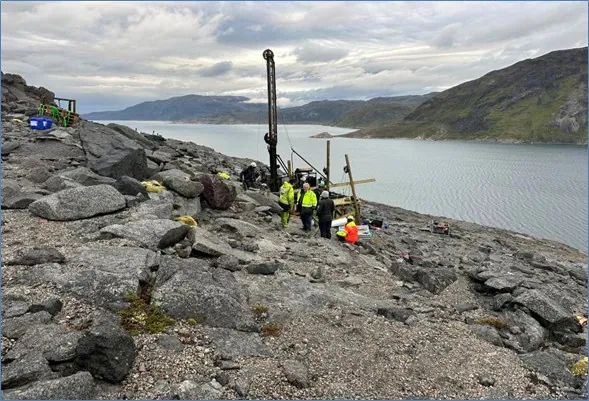
Preliminary refinery study outlines a joint venture designed to process feedstock from its Tanbreez rare earth project in Greenland.
Critical Metals (Nasdaq: CRML) announced Wednesday that its patent-pending process dissolves more than 99% of eudialyte concentrate from its Tanbreez project and recovers 19 ultra-high-purity rare earth and critical metal products.
Eudialyte is a rare red or pink silicate stone used as a major industrial source for zirconium, hafnium, and heavy rare earth elements.
Located at Killavaat Alannguat in southern Greenland, Tanbreez is regarded as one of the largest undeveloped heavy rare earth assets outside China.
The company said plans to run its patent-pending process at a proposed $2.2 billion-a-year refinery in Romania.
The preliminary refinery study outlines a joint venture designed to process feedstock from Tanbreez.
Eudialyte ores have historically been notorious in metallurgical processing due to their tendency to dissolve into a thick, unfilterable silica gel—a hurdle Critical Metals says it “cracked” during process innovations.
The proposed CRML Romanian joint venture refinery, which is expected to receive 50% of all concentrate production under the existing term sheet, incorporates three major process innovations that are projected to enhance project economics.
The proposed CRML Romania process refinery is being designed with capacity to process up to 100,000 tons per year of eudialyte concentrate feed and based on current modelling, produce approximately 27,943 tons per year of rare earth and critical metal products in the form of chloride salts and other ultra-pure products, the company said.
Projected by-products include 25,670 tons per year of high purity SiO2 powder.
Based on current modelling and assumed market pricing, projected annual revenue from the silica by-product could reach approximately $600 million, Critical Metals said.
The current preliminary CAPEX estimate is $1.85 billion, current modelling projects annual revenue of approximately $2.2 billion before operating costs, taxes and capital recovery.
Current modelling indicates an NPV10 of approximately $4.5 billion, an IRR of approximately 55% and a projected payback period of approximately two years.
The silicate recovery system is projected to contribute approximately $400-600 million per year in combined value from SiO2 revenue and avoided acid costs, potentially transforming a conventional waste stream into a significant revenue contributor.
Based on current modelling and pricing assumptions key value drivers include SiO2, NbCl5, DyCl3, TaCl5 and Hafnium products.
The proposed CRML Romania process pefinery uses a multistage, mixed-acid leach process operating at elevated temperatures, followed by cascading recovery steps designed to produce high-purity rare earth salts, metals and critical metal salts for advanced industrial, aerospace, technology and defense applications.
A key feature of the proposed process is the recovery of materials that would traditionally report to tailings, including silica and potentially alumina, iron and copper.
Related News
- RefiningJapanese Refiners Buy Middle East Crude Through Ship-to-Ship Transfers
- RefiningWorld Gold Council urges miners to name refiners
- RefiningDangote's Kenya refinery triggers political battle
- RefiningExxon’s 11 Million-Gallon Refinery Goes Dark. How High Can Midwest Gas Prices Go?
- RefiningEthiopia PM announces launch of its first gold refinery
- RefiningMajor Russian oil refinery in flames after drone strike, Ukrainian General Staff confirms