China drilling for oil and gas inside Taiwan’s exclusive economic zone
Exclusive: Experts say the move could be part of Beijing’s ‘greyzone’ grab for disputed territory China is drilling for oil and gas inside Taiwan’s exclusive economic zone (EEZ), a move that analysts ...
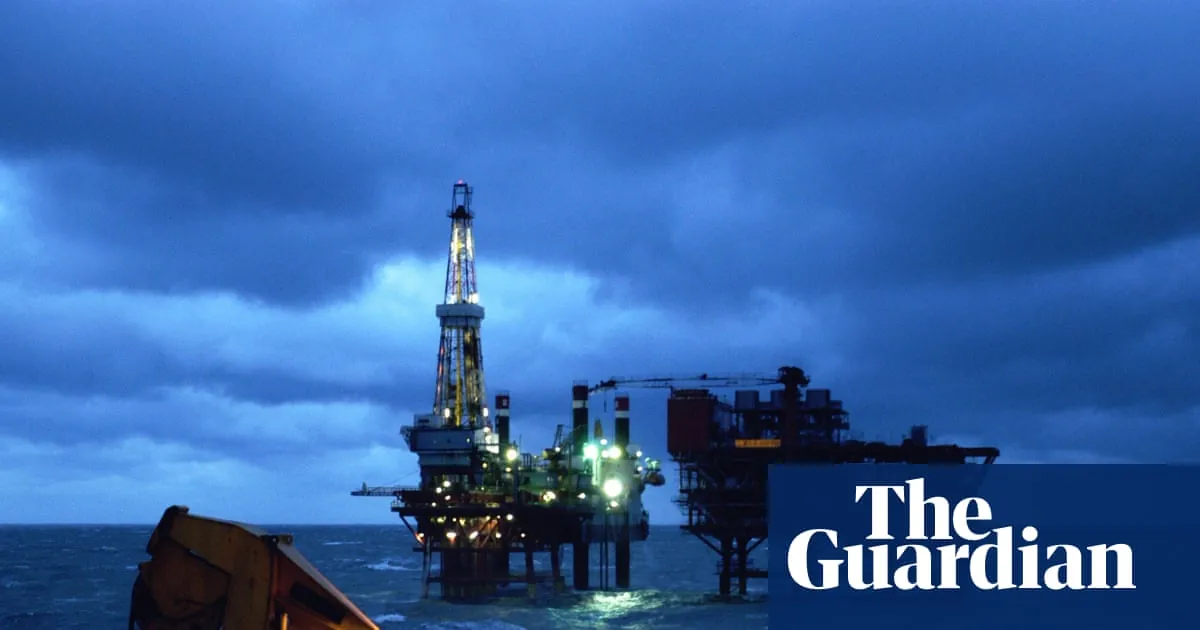
Sign in China National Offshore Oil Corporation's oil rig in a file photo.
China has expanded its oil and gas drilling inside Taiwan’s exclusive economic zone.
Photograph: China Newsphoto/REUTERS View image in fullscreen China National Offshore Oil Corporation's oil rig in a file photo.
China has expanded its oil and gas drilling inside Taiwan’s exclusive economic zone.
Photograph: China Newsphoto/REUTERS China This article is more than 1 year old China drilling for oil and gas inside Taiwan’s exclusive economic zone This article is more than 1 year old Exclusive: Experts say the move could be part of Beijing’s ‘greyzone’ grab for disputed territory Prefer the Guardian on Google China is drilling for oil and gas inside Taiwan’s exclusive economic zone (EEZ), a move that analysts believe is likely part of Beijing’s unilateral grab for disputed territory that could also aid a future invasion of Taiwan .
During July and August at least 12 oil and gas vessels and permanent structures were detected inside Taiwan’s EEZ – including one within 50km of the restricted-waters border of the Taiwan-controlled Pratas Islands – as well as several steel supports for fixed offshore drilling platforms, called jackets.
Their presence inside Taiwan’s EEZ have not been previously reported.
Read more Experts said the activity fit the pattern of Beijing’s “greyzone” strategies for seizing disputed territory.
Beijing claims the entirety of the South China Sea, despite The Hague ruling the claim unlawful in 2016.
Beijing also claims Taiwan is a province of China, and in preparation to forcibly annexe it has ramped up a campaign of “salami slicing” Taiwan’s territory, forcibly shrinking the space that Taipei can control and defend.
“China’s greyzone aggression routinely leverages commercial activity for expansionist goals,” said Ray Powell, director of SeaLight, a maritime transparency project at Stanford University.
The presence of Chinese vessels and structures in the EEZ was first identified in research published on Tuesday by US thinktank the Jamestown Foundation, which said they were owned by the state-run China National Offshore Oil Corporation (CNOOC).
However, there is no sign of the Taiwan government having responded to it, despite frequently enforcing its EEZ elsewhere.
The apparent lack of response has surprised analysts.
“Failure to protest today risks normalising sovereignty shaving and encourages further encroachment,” the Jamestown report warned.
The assets are large – including at least one vessel measuring more than 240m long with decks equivalent to 1.5 football fields, and two of the largest wellhead platforms in Asia.
The report found some had been there for at least five years, with one coming within a kilometre of the Pratas restricted-waters border in 2024.
The Guardian has independently located most of the assets using civilian maritime tracking websites.
View image in fullscreen At least 12 Chinese owned oil and gas exploration structures have been detected inside Taiwan’s exclusive economic zone, including this permanent deep water drilling platform, believed to be one of the biggest in Asia, captured by radar imagery in August 2025.
Photograph: Umbra Challenging the oil and gas activity in Taiwan’s EEZ would be difficult.
Taiwan’s political status meant it is not party to the UN convention on the law of the sea (Unclos) or its arbitration mechanisms.
Domestic law about which parts of the EEZ border Taiwan enforces is unclear and it does not have the maritime strength to challenge such activity.
Related News
- Oil & GasNew England natural gas prices have been trading near record discounts to Henry Hub
- Oil & GasWeekly average load in ERCOT continues near record high
- Oil & GasDangote Swings to $4.7 Billion Profit Ahead of Africa’s Biggest IPO
- Oil & GasWhy Diesel Prices Are So Much Higher Than Gasoline
- Oil & GasSaudi Arabia Becomes the Oil Market’s Biggest Wild Card
- Oil & GasTrump Defends Russian Diesel Deal as Energy Ceasefire Claims Unravel